Common Lawn Weeds Explained: ID + Control Guide
TL;DR
- The most common lawn weeds fall into three groups: broadleaf (dandelion, clover, plantain, creeping Charlie), grassy (crabgrass, quackgrass), and sedges (yellow nutsedge), and each group needs a different control product.
- Selective broadleaf herbicides like 2,4-D and triclopyr kill dandelion and plantain without hurting your grass, but they barely touch clover or ground ivy (Rutgers NJAES).
- Crabgrass is stopped with a spring pre-emergent applied when soil hits about 55 degrees F at a 2-inch depth (University of Minnesota Extension).
- Yellow nutsedge is the most misidentified weed in lawns. It is a sedge, not a grass, so it needs sulfentrazone or halosulfuron, not standard weed killer.
- Fall is the best window for killing perennial broadleaf weeds, since the plant pulls herbicide down into its roots before winter (Purdue Extension).
What Counts as a Common Lawn Weed?
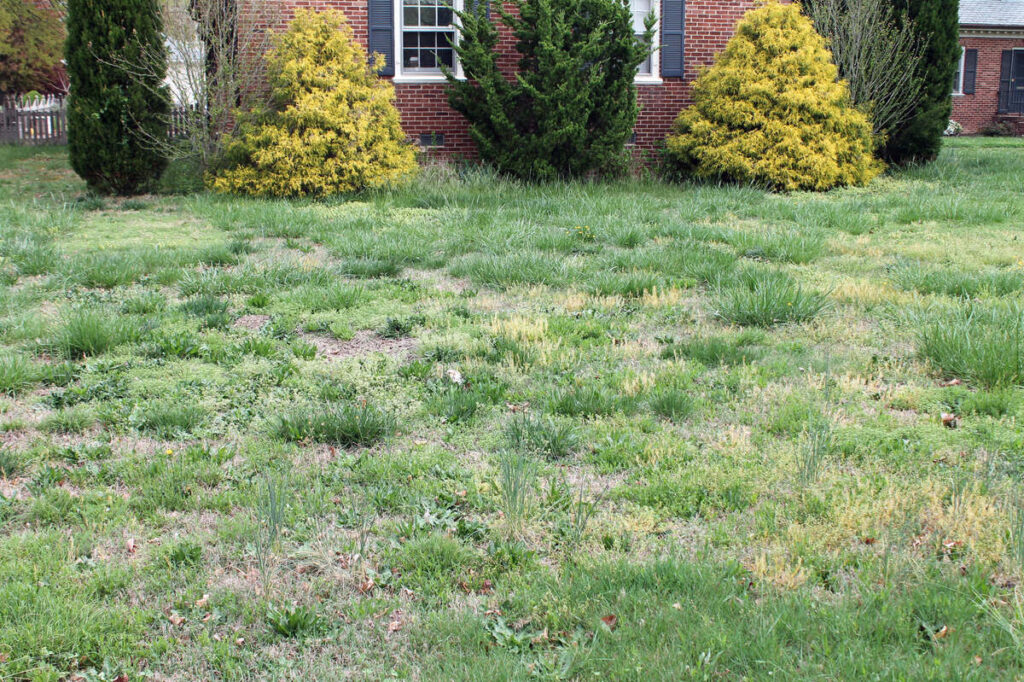
A lawn weed is any plant growing in your turf where you do not want it, and the eight most common ones in US lawns sort into three families: broadleaf weeds, grassy weeds, and sedges. Getting the family right is the whole game, because the herbicide that kills a dandelion does nothing to nutsedge, and a grassy-weed product will not touch clover.
Broadleaf weeds have wide, flat leaves and usually flower. Dandelion, clover, and plantain are the classic examples. Grassy weeds look like your turf with narrow, bladed leaves, which makes them harder to spot. Crabgrass and quackgrass are the usual offenders. Sedges look like grass too, but they have triangular stems you can feel when you roll them between your fingers (This Old House, 2026).
Weeds move into lawns that are thin, stressed, mowed too short, or watered lightly and often. A thick, well-fed lawn is the best defense you have.
How Do You Identify a Lawn Weed in Three Steps?
You can identify almost any lawn weed by checking three things: leaf shape, growth habit, and stem shape. Wide leaves with netted veins point to a broadleaf. Narrow bladed leaves with parallel veins point to a grassy weed. A triangular stem means it is a sedge.
Growth habit narrows it down further. Leaves radiating from a central crown (a rosette) describe dandelion and plantain. Above-ground runners that root as they spread describe clover and creeping Charlie. Bunching clumps from a single crown describe crabgrass.
A phone plant-ID app such as iNaturalist, Seek, or PictureThis works as a starting point, but cross-check the result against a description before you buy a herbicide (Lawn by Season, 2026). When in doubt, your state’s land-grant university extension service has regional weed guides with photos.
The 4 Most Common Broadleaf Weeds
Broadleaf weeds are the easiest to spot because they look nothing like grass, and selective herbicides such as 2,4-D and triclopyr kill most of them without damaging your turf (Penn State Extension). Here are the four you will see most.
Dandelion
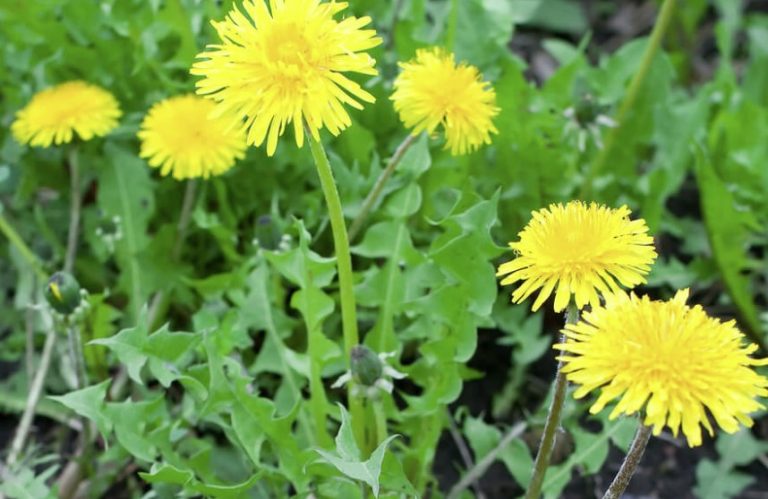
Dandelion is a broadleaf perennial with bright yellow flowers and a flat rosette of jagged, lance-shaped leaves. After flowering it forms the familiar white puffball that scatters seed on the wind. Its deep taproot is what makes it hard to pull cleanly. Dig young plants out with a dandelion fork before they seed, or spot-treat with a 2,4-D-based selective herbicide, which works well on taproot weeds (Rutgers NJAES).
White Clover
White clover is a low, mat-forming perennial with rounded three-leaflet leaves and small white or pink blooms. It spreads by above-ground runners, so pulling rarely finishes it off. Standard 2,4-D is weak on clover, so reach for a product that includes MCPP (mecoprop) or triclopyr for better results (Rutgers NJAES). Some homeowners leave clover alone since it feeds nitrogen back into the soil.
Plantain
Broadleaf plantain is a perennial that grows as a 3 to 6-inch rosette of spoon-shaped leaves with prominent lengthwise veins and a thick taproot. Buckhorn plantain is the narrow-leaved cousin. Both respond well to 2,4-D, which controls plantains as reliably as it controls dandelion (Rutgers NJAES). Tough patches may need a second application.
Creeping Charlie (Ground Ivy)
Creeping Charlie is a perennial with round, scalloped leaves and small purple flowers that spreads by creeping stems rooting at every node, which makes it hard to remove once it settles in. Hand-pulling leaves runners behind, so it grows back. Triclopyr is the active ingredient that handles ground ivy when 2,4-D alone falls short (Rutgers NJAES).
The 2 Most Common Grassy Weeds
Grassy weeds are tricky because they look like your lawn, and broadleaf herbicides will not kill them. For these, prevention with a spring pre-emergent is the main strategy, since post-emergent options are limited once the weed is up (Lawn Care Guides, 2026).
Crabgrass
Crabgrass is a summer annual with wide, coarse blades that grows in low clumps and spreads fast by seed, often along sidewalk edges and in lawns mowed under two inches. It germinates once soil temperature at a 2-inch depth holds near 55 degrees F for several consecutive days, which is your cue to apply a pre-emergent just before that point (University of Minnesota Extension). For plants already up, quinclorac is the standard post-emergent, and mesotrione works on young crabgrass and is safe at seeding time.
Quackgrass
Quackgrass is a cool-season perennial that spreads by underground runners called rhizomes, giving it fast, creeping growth that is genuinely difficult to remove. Because the rhizomes survive, breaking off the top does nothing. There is no selective herbicide that removes quackgrass from a lawn without harming the turf, so control usually means spot-killing with a non-selective product and reseeding the bare spot.
The Sedge Everyone Misidentifies: Yellow Nutsedge
Yellow nutsedge is the most misidentified weed in residential lawns because it looks like grass but is a sedge, a separate plant family that shrugs off both broadleaf and grassy-weed herbicides (Lawn Care Guides, 2026). You can confirm it by feel: roll the stem between your fingers and a sedge stem is triangular, while grass and clover stems are round.
Nutsedge grows faster than your turf, so it shows up as lighter-green spikes standing above a freshly mowed lawn within a couple of days of cutting. It thrives in poorly drained or over-watered spots. The reason it is so stubborn is its underground tuber network, which keeps resprouting after you pull or spray the visible plant.
To control it, use a sedge-specific herbicide such as halosulfuron (sold as Sedgehammer) or sulfentrazone (University of Nebraska-Lincoln Extension). Hitting existing plants first and then treating the soil to catch germinating tubers works better than one pass. If you prefer no herbicide, pull every new plant the moment it emerges, before it forms new tubers, and stay consistent for a few seasons to drain the tuber bank.
Quick Reference: Weed Type and Control Method
| Weed | Type | ID Feature | Main Control |
|---|---|---|---|
| Dandelion | Broadleaf | Yellow flower, jagged rosette, taproot | 2,4-D selective herbicide; dig taproot |
| White clover | Broadleaf | Three-leaflet leaves, white blooms | MCPP or triclopyr |
| Plantain | Broadleaf | Spoon-shaped leaves, veined, taproot | 2,4-D selective herbicide |
| Creeping Charlie | Broadleaf | Round scalloped leaves, purple flowers | Triclopyr |
| Crabgrass | Grassy | Wide blades, low clumps, summer | Spring pre-emergent; quinclorac post |
| Quackgrass | Grassy | Creeping rhizomes, fast growth | Spot-kill non-selective, reseed |
| Yellow nutsedge | Sedge | Triangular stem, fast light-green spikes | Halosulfuron or sulfentrazone |
When Is the Best Time to Kill Lawn Weeds?
Fall is the best time to kill perennial broadleaf weeds like dandelion, clover, and plantain, because the plant is storing energy in its roots for winter and pulls the herbicide down with it. Purdue Extension recommends applying a general broadleaf herbicide from mid-September to early November (Purdue Extension).
Crabgrass runs on a different clock. Its pre-emergent has to go down in spring before soil temperature at a 2-inch depth reaches 55 degrees F for several consecutive days, which often lines up with forsythia blooming (University of Minnesota Extension). Miss that window and the seed germinates anyway.
Most broadleaf weeds show visible wilting within 7 to 10 days of a post-emergent application and die back fully within 2 to 3 weeks. Avoid spraying most herbicides when temperatures climb above 85 degrees F, since heat raises the risk of drift and turf stress (Lawn Care Guides, 2026).
Common Mistakes That Let Weeds Win
- Using the wrong herbicide for the weed type: a broadleaf product on crabgrass or a grassy-weed product on dandelion wastes money and time. Identify the family first, then match the product.
- Mowing too short: cutting under two inches thins the turf and hands crabgrass the sunlight it needs to germinate. Raise the deck and mow tall.
- Watering lightly and often: shallow watering favors weeds over grass. Water deeply and less frequently to push grass roots down.
- Missing the pre-emergent window: applying crabgrass preventer too early lets it break down before seeds sprout, and too late means the seed is already up. Track soil temperature, not the calendar.
- Pulling spreading weeds and calling it done: clover, creeping Charlie, and nutsedge all regrow from runners or tubers left behind, so they need a targeted herbicide or repeated removal.
Frequently Asked Questions
What are the most common weeds in a lawn?
The most common US lawn weeds are dandelion, white clover, plantain, and creeping Charlie among broadleaf weeds; crabgrass and quackgrass among grassy weeds; and yellow nutsedge among sedges (This Old House, 2026). Each group needs a different control approach.
How do I tell a grassy weed from a sedge?
Roll the stem between your fingers. Sedges like nutsedge have a triangular stem with edges you can feel, while grassy weeds such as crabgrass have round stems (This Old House, 2026). This single test separates the two families that look almost identical.
Can I kill lawn weeds without harming my grass?
Yes, for broadleaf weeds. Selective herbicides such as 2,4-D and triclopyr target broadleaf plants without damaging lawn grass (Penn State Extension). Grassy weeds and sedges are harder, because the products that kill them can also stress turf, so they need careful, weed-specific treatment.
When should I apply crabgrass preventer?
Apply crabgrass pre-emergent in spring just before soil temperature at a 2-inch depth reaches 55 degrees F for several consecutive days (University of Minnesota Extension). In many regions this coincides with forsythia shrubs flowering.
Why does nutsedge keep coming back after I pull it?
Yellow nutsedge spreads through an underground network of tubers, so pulling the visible plant leaves the tubers behind to resprout (University of Nebraska-Lincoln Extension). Controlling it means treating with a sedge-specific herbicide or pulling every new shoot consistently for several seasons to exhaust the tubers.
What is the best time of year to control broadleaf weeds?
Fall is the best time to control perennial broadleaf weeds like dandelion, clover, and plantain, with applications from mid-September to early November (Purdue Extension). The plant moves herbicide into its roots as it stores energy for winter, which improves the kill.
The Bottom Line
Start by sorting the weed into broadleaf, grassy, or sedge, because that single decision picks your product for you. Spot-treat broadleaf weeds with a 2,4-D or triclopyr selective herbicide in fall, stop crabgrass with a spring pre-emergent timed to a 55-degree soil temperature, and reach for halosulfuron or sulfentrazone the moment you confirm a triangular nutsedge stem. A thick, tall-mowed, deeply watered lawn does more to keep all of them out than any bottle in the garage.