Why Grass Depends on Microorganisms
TL;DR
- Grass depends on microorganisms because bacteria and fungi break dead organic matter and atmospheric nitrogen into the dissolved nutrients roots can actually absorb.
- A single gram of soil can hold up to 10 billion microorganisms, with bacteria the most abundant group (Penn State Extension; LibreTexts, 2023).
- Grass clippings left on the lawn feed soil bacteria and can supply about 25 percent of a lawn’s yearly fertilizer needs (University of Missouri Extension).
- Tilling, overwatering, and heavy synthetic fertilizer can knock back the microbe populations grass relies on.
- Feed the soil biology with grasscycling, light compost topdressing, and a soil test before you reach for more fertilizer.
What Soil Microorganisms Actually Do for Grass
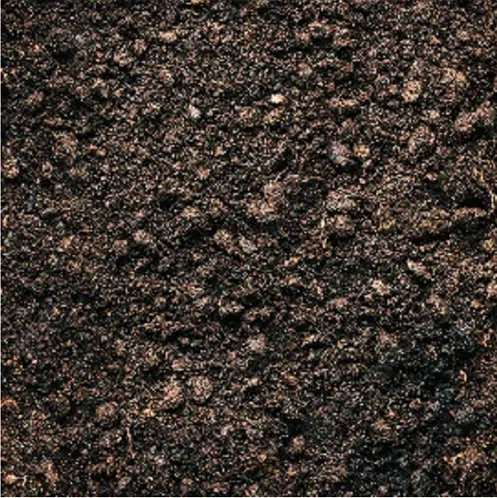
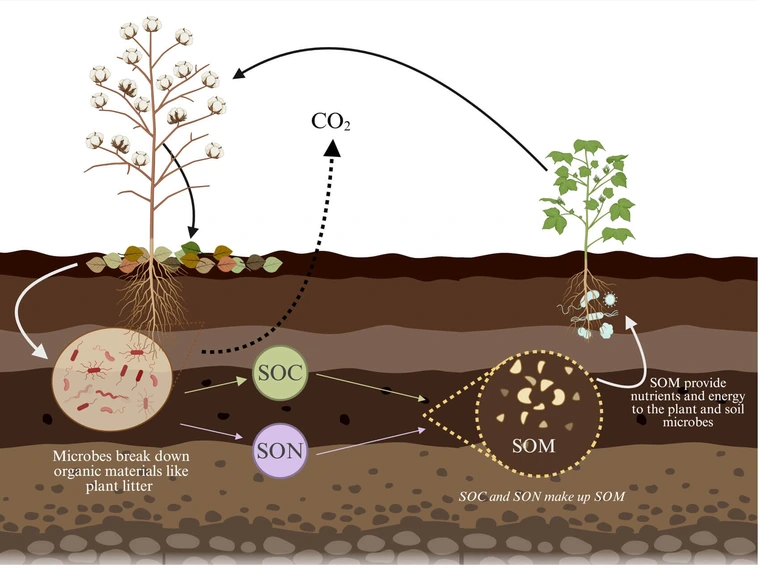
Soil microorganisms are the bacteria, fungi, protozoa, and nematodes that break down organic matter and release nutrients in a form grass roots can absorb. Without them, dead roots and clippings would pile up while the nutrients locked inside stayed unavailable to the living grass above.
Think of microbes as the lawn’s digestive system. Grass sheds roots and drops clippings, microbes break that material down, nutrients get released back into the soil, and the grass takes them up again. The cycle runs on its own as long as the soil stays alive.
Bacteria are the most abundant group and handle most early decomposition. Fungi, including mycorrhizal fungi, extend threadlike filaments far past the root zone and trade hard-to-reach nutrients like phosphorus back to the plant (University of Florida IFAS Extension, 2023). Protozoa and nematodes eat bacteria and fungi, releasing nitrogen as they feed.
How Many Microorganisms Live in Lawn Soil?
A single gram of soil, about a quarter teaspoon, can hold up to 10 billion microorganisms made up of thousands of different species (LibreTexts, 2023). Penn State Extension puts the bacterial count alone at up to several billion per gram. Ohio State University Extension makes the scale easier to picture: there are more microbes in a teaspoon of soil than there are people on Earth, and an acre of soil can hold 8 to 15 tons of bacteria, fungi, protozoa, nematodes, earthworms, and arthropods combined (Ohio State University Extension).
| Microbe Group | Rough Abundance | Main Job in the Lawn |
|---|---|---|
| Bacteria | Up to several billion per gram of soil (Penn State Extension) | Break down clippings and dead roots, fix nitrogen, bind soil particles into stable aggregates |
| Fungi | Several yards to several miles of filaments per gram (Oregon State University Extension, 2023) | Extend root reach, deliver phosphorus and minerals, dominate undisturbed soil |
| Protozoa | Several thousand per gram (Oregon State University Extension, 2023) | Eat bacteria and release plant-available nitrogen |
| Nematodes | Scores per gram (Oregon State University Extension, 2023) | Feed on bacteria and fungi, recycling nitrogen as they go |
These numbers shift fast. Bacteria populations can boom or bust within a few days in response to soil moisture, temperature, and available carbon (NSW soil fact sheet).
How Microbes Turn Nitrogen Into Grass Food
Grass cannot use the nitrogen gas that makes up most of the air, so it depends on bacteria to convert it into usable forms. Nitrogen-fixing bacteria pull nitrogen out of the atmosphere and turn it into compounds roots can take up, a process called nitrogen fixation (Oregon State University Extension, 2023).
A second group, ammonia-oxidizing bacteria, drives nitrification, converting ammonium into nitrate that grass absorbs through its roots. The amount of fertilizer you apply changes how active these bacteria are: moderate nitrogen tends to support nitrifying populations, while very high rates can suppress parts of the nitrogen-cycling community (University of Tennessee, 2022).
This is why a lawn with healthy soil biology often needs less bagged fertilizer. The bacteria are already producing a steady supply of nitrogen from organic matter and the air.
Why Grass Clippings Are Microbe Fuel
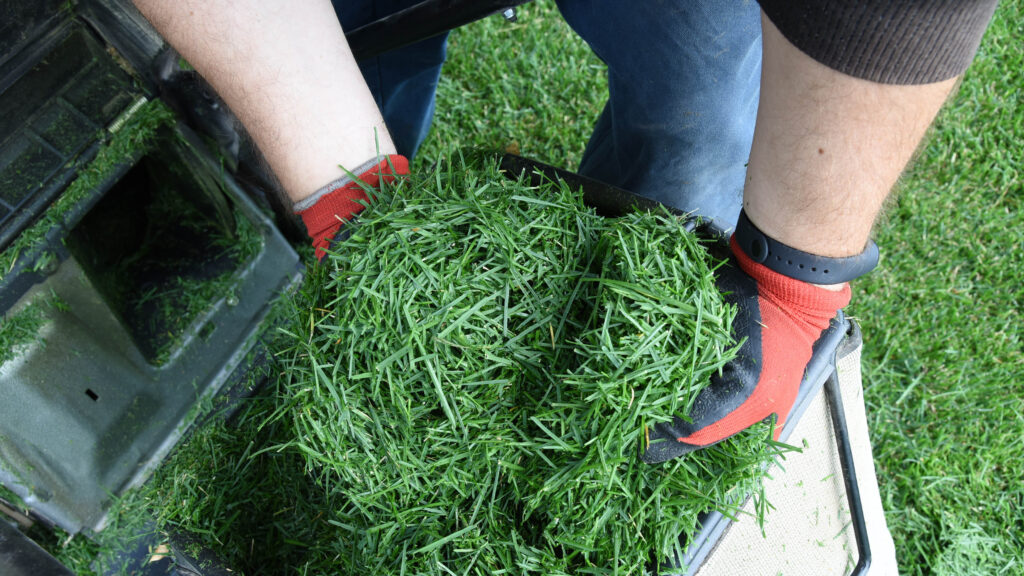
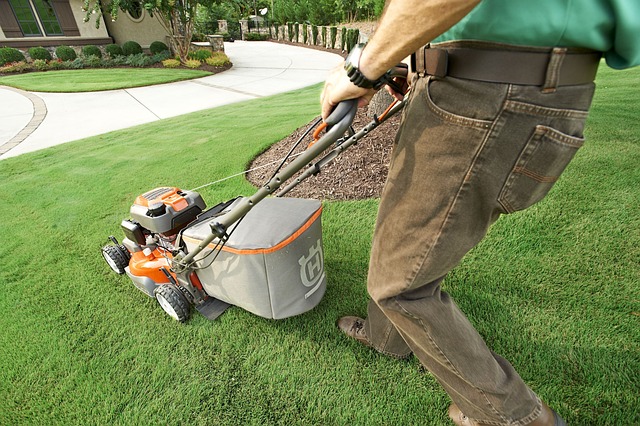
Leaving grass clippings on the lawn feeds soil bacteria and returns nutrients straight to the grass, a practice called grasscycling. Clippings contain about 4 percent nitrogen, 2 percent potassium, and 1 percent phosphorus, and they decompose within days once microbes get to work (University of Missouri Extension).
The payoff is measurable. Returned clippings can supply up to about 25 percent of a lawn’s total fertilizer needs (University of Missouri Extension), and the University of Georgia Extension reports nitrogen recovery from grasscycling as high as 20 percent depending on grass type and conditions. The University of Connecticut found nitrogen from clippings showing up in new growth within about two weeks.
Bagging clippings throws that away. Illinois Extension notes that as much as 50 percent of the nitrogen you apply as fertilizer is hauled off when clippings are collected. For grasscycling to work, mow when the grass is dry and remove no more than about an inch at a time so the clippings filter down instead of matting on top (University of Minnesota Extension).
What Damages the Microbes Grass Relies On
Several common lawn habits reduce the microorganism populations that feed grass. Frequent soil disturbance is one of the biggest. Fungi and nematodes are slow to recover and tend to dominate undisturbed soil, while tilling shifts the balance toward bacteria and sets back fungal networks (Ohio State University Extension).
Watering matters too. Microbes live in thin water films around soil particles, so soil that swings between waterlogged and bone-dry stresses those populations. Very high rates of synthetic nitrogen can also suppress parts of the nitrogen-cycling community (University of Tennessee, 2022). The goal is a steady, living soil rather than repeated chemical shocks.
Common Mistakes That Starve Your Soil
- Bagging every clipping: This removes nitrogen-rich material that would otherwise feed soil bacteria and cut your fertilizer bill (University of Missouri Extension). Leave short, dry clippings on the lawn instead.
- Overapplying synthetic nitrogen: Dumping high rates of fertilizer can suppress nitrogen-cycling bacteria rather than help them (University of Tennessee, 2022). Soil test first, then apply only what the lawn needs.
- Watering shallow and often: This keeps roots near the surface and stresses microbes that need stable moisture. Water deeply and less frequently so the soil column stays evenly moist.
- Tilling or aggressively dethatching healthy soil: Disturbance sets back fungal networks that take a long time to rebuild (Ohio State University Extension). Reserve mechanical work for soil that genuinely needs it.
Frequently Asked Questions
What do microorganisms do for grass?
Microorganisms break down dead roots, clippings, and other organic matter into nutrients grass roots can absorb. Bacteria also convert atmospheric nitrogen into usable forms, and fungi extend the root system’s reach for phosphorus and minerals (University of Florida IFAS Extension, 2023).
How many microbes are in lawn soil?
A single gram of soil can hold up to 10 billion microorganisms across thousands of species (LibreTexts, 2023). Ohio State University Extension notes there are more microbes in a teaspoon of soil than people on Earth.
Can soil microbes replace fertilizer?
Not entirely, but they reduce how much you need. Returned grass clippings feeding soil bacteria can supply up to about 25 percent of a lawn’s yearly fertilizer needs (University of Missouri Extension), and active nitrogen-fixing bacteria add more on top of that.
How do I increase microorganisms in my lawn soil?
Leave grass clippings on the lawn, topdress lightly with finished compost, water deeply and less often, and avoid unnecessary tilling. Run a soil test before adding fertilizer so you feed the soil rather than shock it.
Does fertilizer kill soil microbes?
Moderate fertilizer can support nitrifying bacteria, but very high rates of synthetic nitrogen can suppress parts of the nitrogen-cycling community (University of Tennessee, 2022). Apply based on a soil test rather than guessing.
How long do grass clippings take to break down?
Properly mowed clippings decompose within a few days to a couple of weeks as soil bacteria feed on them, and the nitrogen can appear in new grass growth within about two weeks (University of Connecticut; University of Missouri Extension).
The Bottom Line for a Healthier Lawn
Grass grows on top, but it eats from below. The bacteria and fungi in your soil are the system that turns dead matter and air-borne nitrogen into the food your lawn lives on. Leave your clippings, water deeply, soil test before fertilizing, and skip the unnecessary tilling. Feed the soil biology and the green takes care of itself.