Why Water Doesn’t Seem to Help Your Grass
TL;DR
- If watering doesn’t green up your lawn, the water likely isn’t reaching the roots at all.
- Soil compaction, thatch thicker than ½ inch, and drought dormancy are the three most common causes.
- Dormant grass can survive 4 to 6 weeks without permanent damage (Iowa State University Extension, 2025).
- Cool-season grass needs 1 inch of water per week to stay green; dormant turf only needs ½ inch every two weeks just to stay alive (Purdue University, 2012).
- Start with a screwdriver test and a thatch measurement before changing your watering schedule.
What’s Actually Happening When Water Doesn’t Help
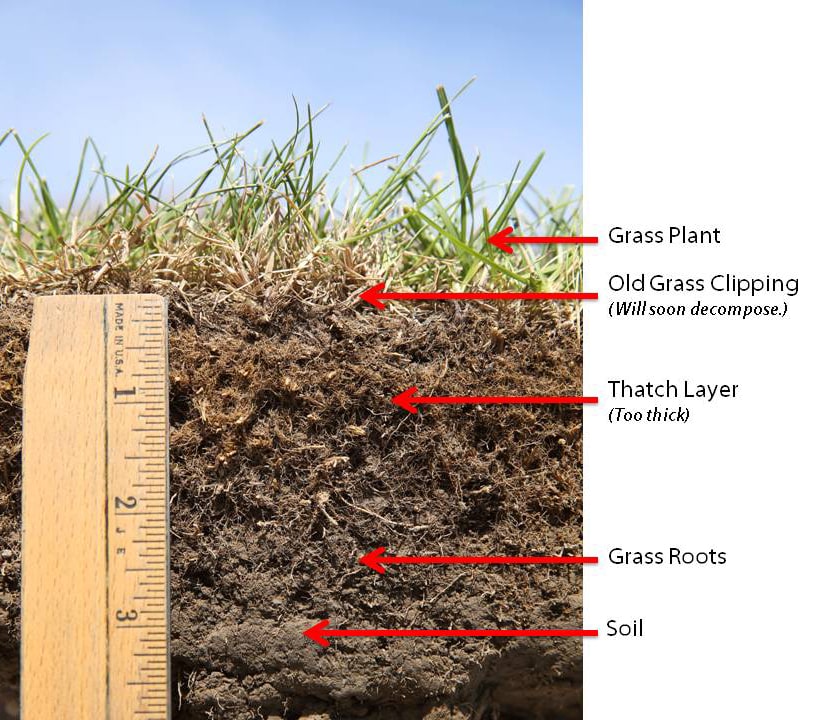
credit: https://greenmanlawncare.co.uk/
Water can fail to revive grass for two completely different reasons: the water isn’t getting to the roots, or the roots are alive but the grass is dormant and won’t respond until conditions change.
These two problems look identical from the surface – brown, dry, flat-lying blades that don’t bounce back. But the fix for each is different, and treating dormancy like a watering deficit can make compaction and thatch worse over time. Work through the causes below to figure out which one applies to your lawn.
Why Water Runs Off Instead of Soaking In
Soil Compaction Is Sending Your Water Straight to the Storm Drain
Compacted soil is the number one reason water sits on the surface and runs off rather than soaking into the root zone. When soil particles are packed too tightly – by foot traffic, heavy mowers, clay-heavy soil, or years of poor drainage – water can’t penetrate fast enough and just sheets off.
You can test this in 30 seconds. Push a standard flat-head screwdriver into the ground after watering. If it goes in easily 6 inches, compaction isn’t your problem. If it stops at 2 or 3 inches like you hit concrete, you’ve found your culprit.
Aerating in fall (for cool-season grasses like Kentucky bluegrass or tall fescue) or in late spring (for warm-season grasses like Bermuda or Zoysia) breaks up compacted layers and lets water reach the root zone again.
A Thick Thatch Layer Is Acting Like a Sponge Above the Soil
Thatch is the layer of dead stems, roots, and organic debris that builds up between the green grass blades and the actual soil. A thin thatch layer, under ½ inch, is fine – it helps retain moisture and insulates the soil from temperature swings. But once thatch exceeds ½ to ¾ inch, it stops working for you and starts working against you.
Thick thatch absorbs irrigation water like a sponge and holds it above the root zone, where it evaporates before ever reaching the soil. The grass roots, starved for moisture, may actually start growing up into the thatch layer instead of down into the soil – which makes drought stress worse every summer.
To check your thatch, cut out a small plug of turf about 3 inches deep with a trowel. The brown fibrous layer between the green grass and the dark soil is your thatch. Measure it. Anything over ½ inch is restricting water absorption.
| Thatch Depth | Status | Action Needed |
|---|---|---|
| Under ½ inch | Healthy | None – maintain current practices |
| ½ to ¾ inch | Borderline | Monitor; aerate in fall to encourage breakdown |
| Over ¾ inch | Problem | Dethatch or core aerate; Bermuda and Zoysia may need power raking |
| 1 inch or more | Severe | Dethatch immediately; water and fertilizer are not getting through |
Why the Grass Itself Isn’t Responding
Your Grass Is Dormant, and Watering Won’t Wake It Up Yet
Dormancy is grass’s survival mechanism. When temperatures spike and soil moisture drops, cool-season grasses like Kentucky bluegrass and tall fescue stop growing and redirect all their energy to protecting the crown and root system. The blades die back and turn brown. This is normal, not a death sentence.
Watering dormant grass will not make it green again until the heat breaks or a consistent rainfall pattern returns. Applying ½ inch of water every two weeks is enough to keep dormant turf crowns alive – but that amount will not reverse dormancy or green the lawn back up (Purdue University, 2012).
Cool-season grasses can stay dormant for 4 to 6 weeks before permanent crown damage sets in (Iowa State University Extension, 2025). Warm-season grasses like Bermuda and Zoysia handle heat better and typically recover within 2 to 3 weeks once water returns.
If your lawn went dormant more than 6 weeks ago with no supplemental irrigation at all, some thinning and crown death may have already occurred. Recovery after rains return may be incomplete, and overseeding in fall may be needed.
You’re Watering Shallowly and Too Often
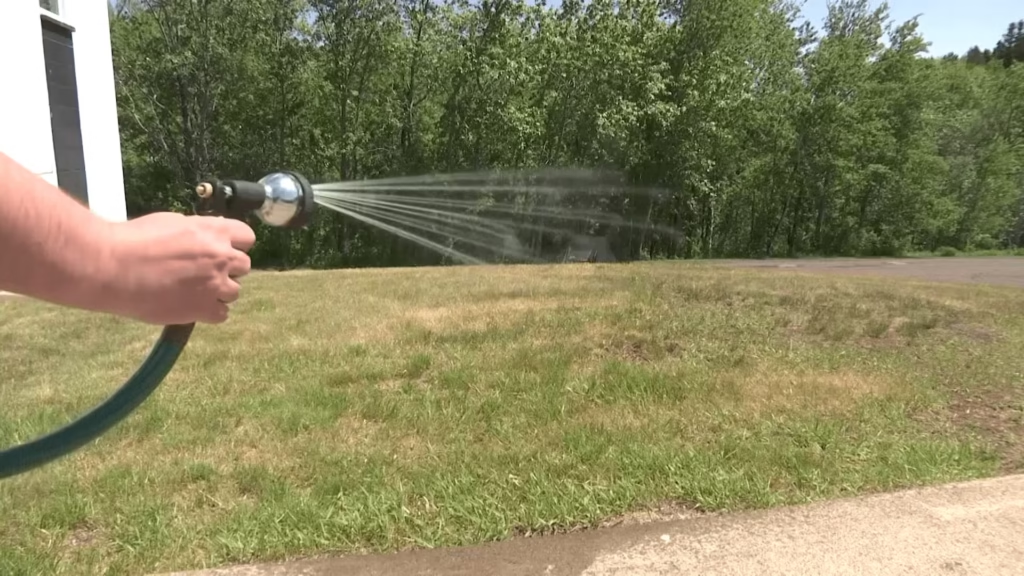
Frequent, light watering encourages shallow roots. If you’re running your sprinklers for 10 minutes every day, you’re wetting the top inch of soil and training the roots to stay there. When a dry spell hits, those shallow roots have no reserve moisture to draw from, and the lawn shows stress almost immediately.
Deep, infrequent watering is the correct approach. For cool-season grasses, apply enough water to wet the soil 6 inches down, then wait until you see the first signs of stress before watering again. Two to three times per week with a deep soak beats light daily sprinkles every time.
Early morning watering, between 6 a.m. and 8 a.m., prevents much of the water loss from afternoon evaporation. Midday watering in summer heat loses a significant portion of moisture before it ever reaches the root zone.
The Lawn Is Dry in Patches Because of Uneven Soil Conditions
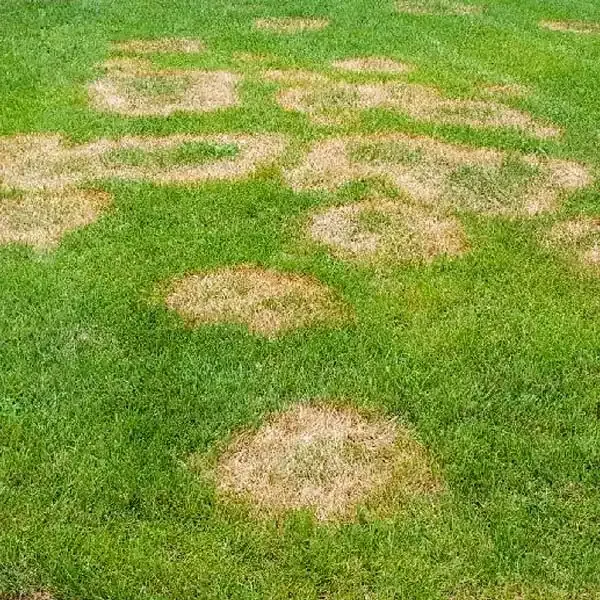
If the brown areas are patchy rather than uniform across the whole lawn, the problem isn’t your watering schedule. Uniform brown typically means dormancy or an across-the-board water deficit. Patchy brown points to localized causes: soil compaction in high-traffic zones, shade vs. sun differences, grub damage below the surface, dog urine burn spots, or disease.
Pull on the brown blades in a patchy area. Dormant grass resists – the roots hold. Dead grass from grubs or disease pulls up with almost no resistance because the root system is gone. If the turf lifts like a carpet, grubs or billbugs are the more likely issue, not water distribution.
Watering Mistakes That Make This Worse
- Watering at midday in summer: Evaporation rates are highest in the afternoon heat, so much of what you apply never reaches the soil. Water before 8 a.m.
- Applying water too fast for compacted soil to absorb: Use a cycle-and-soak method – water for 10 minutes, pause for 30, then water again. This lets compacted soil absorb what it can between cycles.
- Adding fertilizer to wake up dormant grass: Fertilizer will not pull grass out of dormancy. Only cooler temperatures and consistent rainfall do that. Applying nitrogen to heat-stressed dormant turf can scorch it further.
- Ignoring foot traffic on dormant lawns: Walking or running equipment over dormant grass damages the crowns and stems. That damage won’t be visible until recovery begins – and some areas may not recover at all.
Frequently Asked Questions
Why is my grass still brown after watering for two weeks?
If you’ve been watering consistently but the grass stays brown, it’s either dormant (which won’t respond to water until temperatures cool) or the water isn’t reaching the roots due to compaction or thick thatch. Do the screwdriver test and check your thatch depth before changing anything else.
How can I tell if my grass is dormant or actually dead?
Pull on a handful of blades. Dormant grass resists because the crown and roots are still alive. Dead grass pulls up easily with no resistance. Uniform browning across the whole lawn typically means dormancy; patchy browning in irregular spots usually means something else is going on.
How much water does dormant grass actually need to survive?
½ inch of water every two weeks is enough to keep dormant turf crowns hydrated without forcing the grass to break dormancy (Purdue University, 2012). That amount won’t green up the lawn, but it prevents crown death during extended dry spells.
How do I know if my lawn has too much thatch?
Cut a small plug of turf about 3 inches deep with a trowel. The spongy brown layer between the green grass and the dark soil is thatch. If it measures more than ½ inch, it’s restricting water absorption. Over ¾ inch, plan on dethatching or core aerating this season.
Will aerating actually fix my watering problem?
Yes, if compaction or thick thatch is the underlying cause. Core aeration pulls small plugs of soil out of the ground, opening channels for water, air, and nutrients to reach the root zone. For compacted lawns, a single fall aeration can noticeably improve water penetration within one growing season.
What grass types handle dry conditions better?
Warm-season grasses – Bermuda, Zoysia, St. Augustine, and Buffalograss – are significantly more drought-tolerant than cool-season grasses like Kentucky bluegrass and tall fescue. Bermuda and Zoysia can go fully dormant under heat stress and recover on their own once rain returns. If you’re in the transition zone or further south, switching to a warm-season variety reduces summer watering needs substantially.
Quick Diagnosis Guide
| Symptom | Most Likely Cause | First Step |
|---|---|---|
| Uniform brown across whole lawn | Drought dormancy | Screwdriver test; check if grass pulls up easily |
| Patchy brown in irregular spots | Grubs, disease, or dog urine | Pull on the brown turf – if it lifts easily, check for grubs |
| Water pooling or running off | Soil compaction or thick thatch | Screwdriver test; cut a thatch plug and measure |
| Lawn feels spongy underfoot | Thatch over ½ inch | Measure thatch and plan aeration or dethatching |
| Grass greens up in some spots but not others | Uneven compaction or soil depth | Aerate problem zones; check for localized foot traffic patterns |