The Complete Guide to Diagnosing Grass Problems
TL;DR
- Most grass problems fall into four categories: fungal disease, insect damage, nutrient deficiency, or environmental stress (drought, compaction, poor drainage)
- The shape and location of damaged areas is the fastest first clue – circular patches usually point to disease; irregular dead zones usually point to insects or drought
- Yellowing grass is the most common symptom but has five distinct causes that require different fixes
- A soil test from your local cooperative extension office costs $15-$30 and eliminates guesswork on nutrient issues
- Most lawn diseases clear up with cultural fixes before you need a fungicide – per Oregon State University Extension, poor lawn care is the most likely cause of unhealthy grass, not disease pathogens
How to Start Diagnosing Grass Problems
credit: https://randylemmon.com/
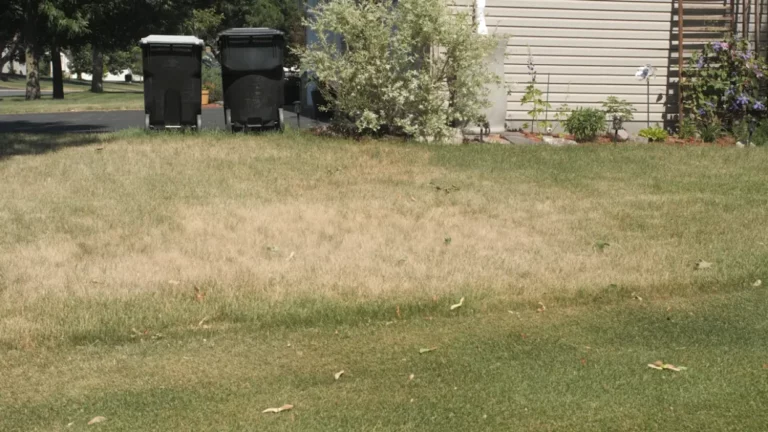
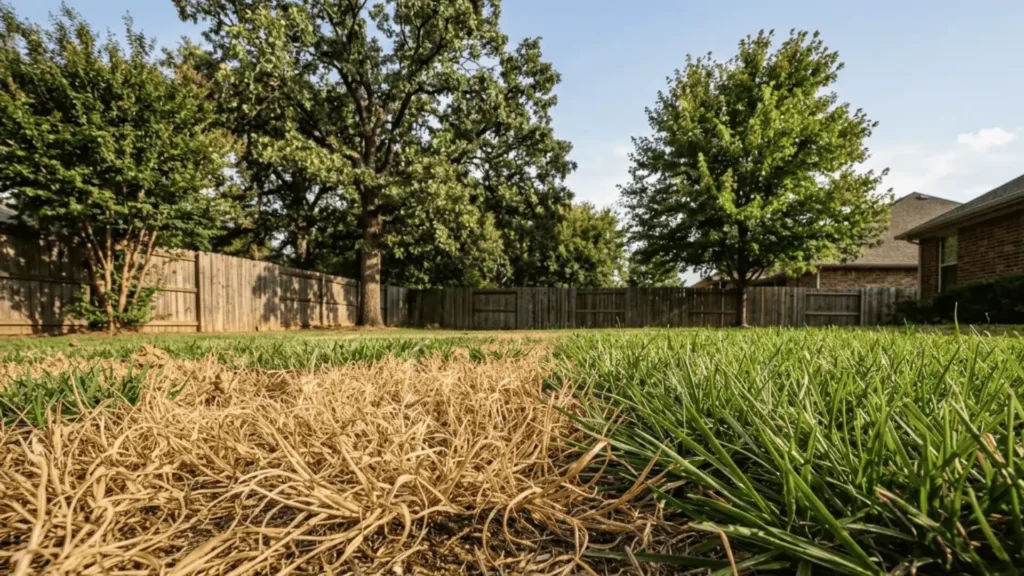
Start by looking at the pattern of damage, not just the color. A circular brown patch 12 inches across is a completely different problem from an irregular dead strip running along a fence line. Getting the shape and distribution right first cuts diagnosis time in half.
Ask three questions before reaching for any product:
- Where is the damage: scattered, circular, or in a straight line?
- When did it appear: after rain, after a hot dry week, or after fertilizing?
- What does the damaged blade look like up close: spots, fraying, or clean yellowing?
Per University of Florida Extension, the first step is to rule out physical destruction or a disorder before assuming disease. Physical destruction includes mowing too short or pesticide damage. A disorder means improper environmental conditions – nutrient deficiencies, drought, or cold damage. These problems can cause the same symptoms as disease, or even trigger disease by weakening the grass.
Fungal Disease: How to Identify It
Fungal disease is the most commonly misdiagnosed grass problem because it mimics drought and nutrient deficiency. The two most reliable tells are circular or arc-shaped damage patterns and visible spots on individual blades.
The two main symptoms of turfgrass diseases are a circular patch that is no longer uniformly green and spots on the foliage.
Brown patch is the most widespread fungal disease in the US. It shows as circular patches of brown dead grass surrounded by a narrow dark ring. Blades within the patch may carry irregular tan lesions with a dark brown border. In active patches, a grayish-purple border called a smoke ring appears in the morning when dew is present.
Brown patch thrives at warm temperatures (70-90°F) for cool-season grasses like bluegrass, ryegrass, and fescue, and at slightly cooler temperatures (60-70°F) for bermudagrass and zoysiagrass. High humidity and excess nitrogen fertilization both make it worse.
Dollar spot, rust, and red thread are also common. Lawns grown under nitrogen-deficient conditions are especially prone to dollar spot, rust, and red thread. If your lawn is thin and pale and also developing spots, low nitrogen may be feeding both problems at once.
What to Check If You Suspect Fungal Disease
- Walk the lawn early morning and look for a smoke ring or white cottony growth on blades
- Check whether the damaged patch has a defined circular edge – disease patches usually do
- Look at recent weather: most fungal outbreaks follow a stretch of warm, wet nights
- Signs of a pathogen include white cottony growth of a fungus or water mold, mushrooms or rust pustules on blades, and resting bodies called sclerotia
Insect Damage: What It Looks Like on the Ground
Insect damage usually shows up as irregular dead patches that don’t have the clean circular edge of a fungal disease. The most common culprits in US lawns are white grubs, chinch bugs, and sod webworms.
Grubs consume grass roots, causing dead patches that peel away from the soil like loose carpet. Before those patches appear, you may feel a spongy sensation when walking on the lawn, similar to freshly laid sod. Wildlife digging up the yard – skunks, raccoons, and birds – is another early sign.
Chinch bugs work differently. They feed on the sap inside grass blades and inject a toxin that blocks water uptake. Damage starts as small yellow patches in hot, dry areas of the lawn – often along driveways or sidewalks – and spreads outward. Part the grass at the edge of a damaged area and look for small black-and-white insects about 1/5 inch long moving near the soil.
Insect vs. Disease: Quick Comparison Table
| Symptom | Likely Cause | How to Confirm |
|---|---|---|
| Dead patches peel away from soil | White grubs | Dig a 1 sq. ft. section 3 inches deep; 10+ grubs = infestation (University of Maryland Extension) |
| Yellow patches near pavement in summer heat | Chinch bugs | Part grass at damage edge; look for small black-and-white insects |
| Irregular brown patches, lawn moths flying at dusk | Sod webworms | Drench a 1 sq. ft. section with soapy water; larvae surface within minutes |
| Circular brown patch, smoke ring in morning dew | Fungal disease | Inspect individual blades for lesions or spots |
| Spongy lawn, no visible blade damage | Early grub damage | Dig and count as above |
Nutrient Deficiency: Reading the Color of Your Grass
credit: https://www.essentialhomeandgarden.com/
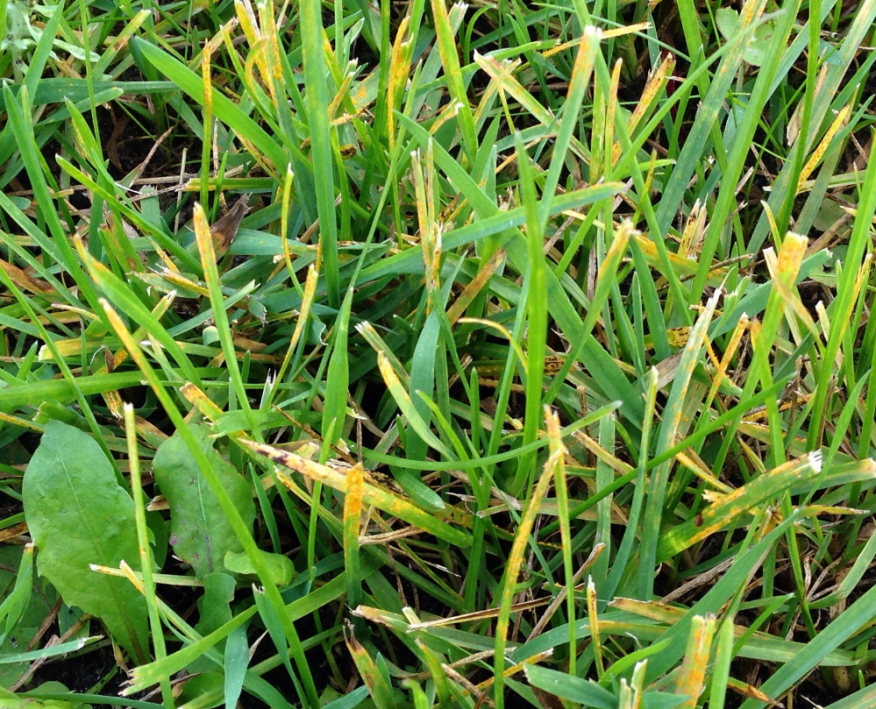
Yellowing grass is the most common complaint homeowners bring to extension offices, and it has at least five different nutrient causes – each with a distinct pattern.
An overall or mottled pale green to golden yellow color in an established lawn may indicate iron or nitrogen deficiency. Severe deficiencies can produce chlorosis, which shows as yellow streaks running parallel to the leaf veins. Long-term deficiency causes overall thinning and decline.
The location of yellowing on the blade tells you a lot:
- When a mobile nutrient like nitrogen runs short, symptoms tend to appear first on older, mature leaves because the plant pulls those resources toward newer growth. With immobile nutrients, damage shows on younger leaves instead.
- Iron deficiency shows as yellowing between the veins of the leaf while the veins themselves stay green – a pattern called interveinal chlorosis. Iron is the most frequently deficient micronutrient in turfgrass.
- Phosphorus deficiency causes grass to accumulate a reddish pigment called anthocyanin, which turns leaves purple. Purple coloring can also result from cold damage, so rule out low temperatures before applying phosphorus.
A soil test is the only reliable way to confirm which nutrient is missing. University of Maryland Extension recommends testing before applying anything, since adding the wrong nutrient can make deficiencies worse – high phosphorus levels, for example, block iron uptake even when iron is present in the soil (University of Maryland Extension, 2023).
Environmental Stress: Drought, Compaction, and Drainage
Environmental problems cause more grass damage than disease and insects combined, per Oregon State University Extension (2026). The tricky part is that stressed grass is also more susceptible to fungal infection, so both problems can run together.
Drought stress shows first as a blue-gray tint to the lawn before browning sets in. Footprints that stay visible for 30+ seconds after you walk across the lawn are a reliable early sign – the blades aren’t bouncing back because the cells lack water pressure.
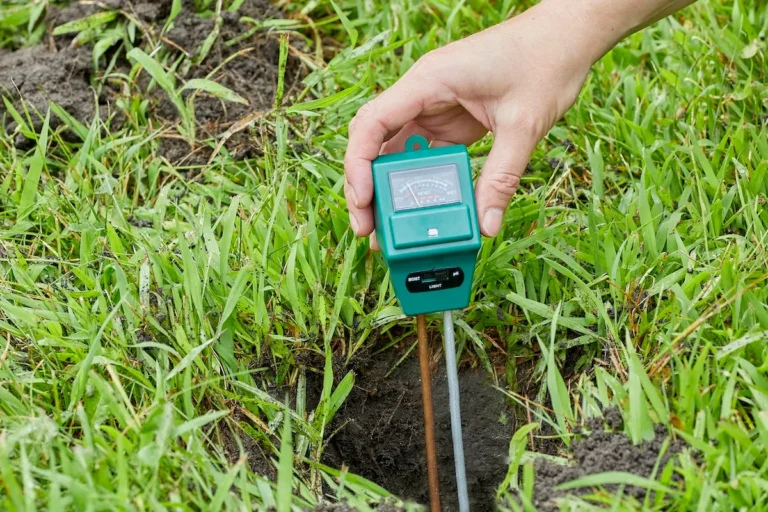
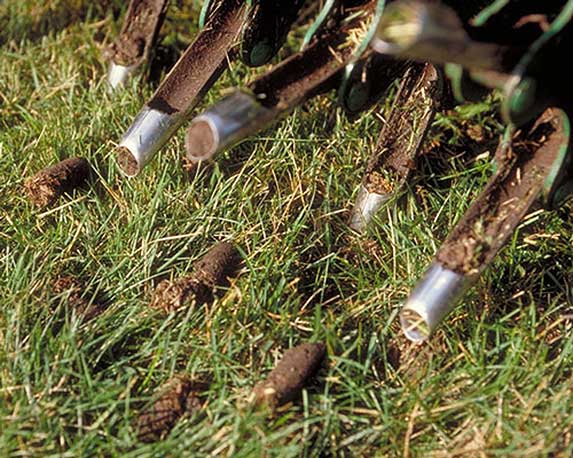
Compacted soil blocks root growth and prevents water and air from reaching the root zone. A simple test: push a screwdriver 6 inches into the soil. If it takes real force, compaction is likely. Lawns in heavy clay soils or high-traffic areas are most at risk.
Poor drainage produces soggy patches that stay wet long after rain and often develop moss or algae. A lawn that retains water or has persistently soggy areas long after rain or irrigation suggests poor drainage, which can lead to root death and a lawn that looks weedy or yellow.
Common Mistakes That Cost You More in the Long Run
- Applying fungicide before confirming disease: most brown patches in spring are drought stress or grub damage, not fungal disease. Fungicide on an insect problem does nothing and costs $30-$80 per treatment (Angi, 2024 estimate).
- Fertilizing a diseased lawn: adding nitrogen to an active brown patch or pythium blight outbreak accelerates fungal spread. Excess nitrogen, especially fast-release soluble forms, produces soft succulent growth that fungal pathogens penetrate more easily.
- Skipping the soil test: without knowing your soil pH and nutrient levels, fertilizer applications are guesswork. Iron won’t absorb in soil above pH 7.0, so adding iron fertilizer to alkaline soil solves nothing until the pH comes down.
- Overwatering after diagnosis: wet conditions help most fungal diseases spread. Water deeply and infrequently – 1 inch per week total – rather than light daily watering that keeps the surface perpetually moist.
Frequently Asked Questions
How do I know if my grass problem is disease or drought?
Drought stress produces a uniform blue-gray color and footprints that stay compressed. Fungal disease produces circular patches with defined edges and visible spots or lesions on individual blades. Check a single blade up close before doing anything else. If the blade looks clean and uniform, suspect drought or nutrient issues first.
How much does a soil test cost and where do I get one?
A basic soil test from a cooperative extension office runs $15-$30 in most states and gives you pH, nitrogen, phosphorus, and potassium levels. Contact your state’s land-grant university extension service – most offer mail-in kits. Commercial labs like Logan Labs charge $20-$40 and return results in a few days.
Can yellow grass recover without any treatment?
Yes, if the cause is drought or mild nitrogen deficiency. Water the lawn to 1 inch per week and wait two weeks. If color returns, moisture was the issue. If it doesn’t, pull a soil test before applying any fertilizer. Applying the wrong nutrient to yellowing grass can lock out the one it actually needs.
What time of year do most grass problems show up?
Late spring through early summer is peak time for fungal disease, especially brown patch, which thrives in humid warmth. Grub damage typically appears in late summer when larvae hatched from July and August eggs begin feeding on roots. Nutrient deficiency shows up whenever a lawn emerges from winter without adequate fertilization, usually March through April for cool-season grasses.
When should I call a lawn care professional instead of treating it myself?
Call a professional if the same problem returns in the same area two years in a row, if the damaged area covers more than 20% of the lawn, or if a soil test reveals pH problems that require lime or sulfur applications. Most residential lawn diseases can be managed without fungicides, but when chemical treatment is necessary, it should be applied by a licensed professional with the right spray equipment.
Do I need a fungicide for brown patch?
Usually not. Fungicides are available for brown patch but often not warranted. The better fixes are reducing shade, improving aeration and drainage, avoiding excess nitrogen, and maintaining the highest practical mowing height. Fix the conditions that allowed disease to develop and most lawns recover without any chemical treatment.