Best Low-Maintenance Grass Options for 2026
TL;DR
- Fine fescues are the top low-maintenance choice for cool-season climates (USDA zones 3-7), requiring mowing as little as once a month during peak season (Nature’s Seed, 2025).
- Buffalo grass is the low-water champion for warm-season lawns, staying green on 50-75% less irrigation than Kentucky bluegrass once established (Colorado State University Extension, 2025).
- Zoysia is the best all-around warm-season option for zones 7-9, with slow growth, good shade tolerance, and strong drought resistance once its root system is established.
- Your USDA hardiness zone is the first thing to check — the wrong grass for your climate will always be high-maintenance, regardless of the variety.
- Avoid Kentucky bluegrass if low maintenance is the goal: it needs up to 2 inches of water per week and weekly mowing in summer (Nature’s Seed, 2025).
What Makes a Grass Variety Truly Low-Maintenance?
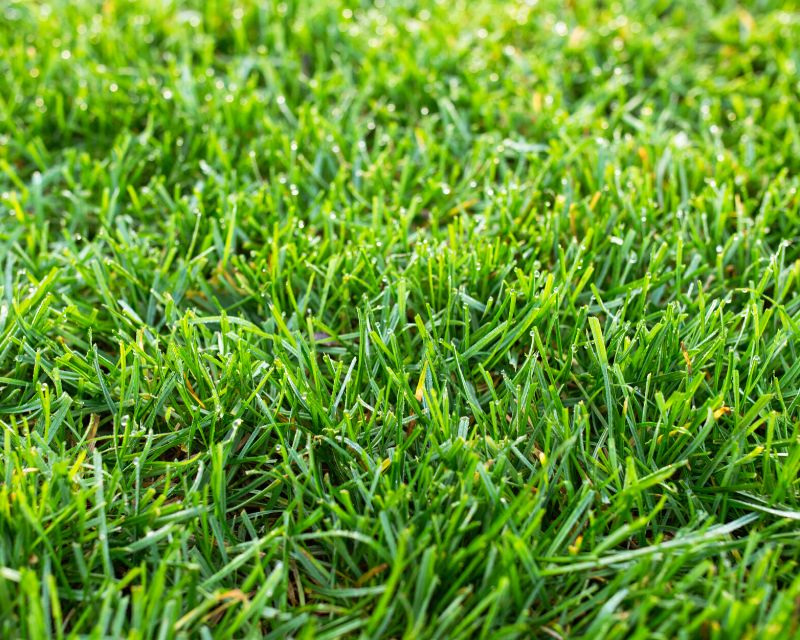
A low-maintenance grass is one that needs significantly less water, fertilizer, and mowing than the standard lawn benchmark. That benchmark, per Nature’s Seed (2025), is Kentucky bluegrass: up to 2 inches of water weekly, mowing once a week during summer, and regular fertilizer to hold its appearance. Any grass that cuts those requirements in half or more qualifies as genuinely low-maintenance.
There are three inputs to evaluate for each variety: mowing frequency, water needs, and fertilizer requirements. A grass can score well on one and poorly on another. Buffalo grass barely needs mowing but goes dormant and turns brown in summer without some irrigation. Zoysia is slow-growing and drought-tolerant but requires patience during establishment. Knowing which trade-offs you can live with is how you pick the right one.
Cool-Season Climates: Best Low-Maintenance Grass for Zones 3-6
Fine fescues are the right call for low-maintenance lawns in northern states. This group includes hard fescue, sheep fescue, creeping red fescue, and chewings fescue. They grow slowly enough that most homeowners mow them roughly once a month during the growing season, and some leave them unmowed for a more natural meadow look (Nature’s Seed, 2025).
Water needs are also modest. Fine fescues perform well on about 1 to 1.25 inches of water per week, and in many parts of the northern US, normal rainfall covers that without supplemental irrigation (Blue Thumb). They also run on far less fertilizer than Kentucky bluegrass, about 0.5 lbs of nitrogen per 1,000 square feet compared to 3 lbs for bluegrass (Blue Thumb).
Tall fescue is a step up in maintenance from fine fescues but still well below Kentucky bluegrass. It has a deep, wide root system that pulls moisture from lower in the soil during dry stretches, and it handles heat better than most cool-season grasses. If you’re in the transition zone, roughly zones 6-7 where summers get hot, tall fescue often holds up better than fine fescues, which can struggle in prolonged heat.
| Grass Type | USDA Zones | Mowing Frequency | Water Per Week | Fertilizer Need |
|---|---|---|---|---|
| Fine Fescue (blend) | 3-7 | Every 3-4 weeks | 1-1.25 in. | Very low (0.5 lb N/1,000 sq ft) |
| Tall Fescue | 4-7 | Every 10-14 days | 1-1.5 in. | Low-moderate |
| Kentucky Bluegrass | 2-6 | Every 7 days | 2 in. | High (3 lb N/1,000 sq ft) |
Warm-Season Climates: Best Low-Maintenance Grass for Zones 7-10
Buffalo grass is the standout option if water savings are the priority. Once established, it can stay green on 50-75% less irrigation than Kentucky bluegrass, and it thrives with one or two fertilizer applications per year (Colorado State University Extension, 2025). It grows low to the ground, which means less frequent mowing than most warm-season varieties. The catch: it needs at least six to seven hours of direct sunlight daily and is not a fit for shaded yards (Today’s Homeowner, 2025).
Zoysia is the better choice if your yard has mixed sun and shade, or if you want a lawn that holds up to foot traffic. It performs best in USDA zones 7-9, grows slowly enough to need mowing every 10-14 days at peak, and needs about 1 inch of water per week once established (LawnBySeason, 2026). Zoysia also goes dormant in winter, turning straw-colored, so expect four to five months of brown in zones 7-7b.
Bermuda grass is worth considering for high-traffic areas in zones 7-10. It’s drought-tolerant once rooted, with a root system that can extend 6-8 feet deep (Clean Cut Landscape, 2025). It goes dormant longer than Zoysia, meaning fewer mowing sessions during that period. The downside is that it needs full sun and does not tolerate shade at all.
Centipede grass is a lower-profile option for zones 7-9 that genuinely thrives on neglect. It needs minimal fertilizer, grows slowly, and does not require much water. It won’t hold up well to heavy foot traffic, but for a yard that mostly gets looked at rather than played on, it’s one of the lowest-effort options available.
| Grass Type | USDA Zones | Mowing Frequency | Water Per Week | Shade Tolerance |
|---|---|---|---|---|
| Buffalo Grass | 5-9 | Infrequent | Very low | Very low |
| Zoysia | 7-9 | Every 10-14 days | ~1 in. | Moderate |
| Bermuda | 7-10 | Every 3-7 days (peak) | Low-moderate | Very low |
| Centipede | 7-9 | Every 10-14 days | Low | Low-moderate |
How to Match Your Grass to Your USDA Zone
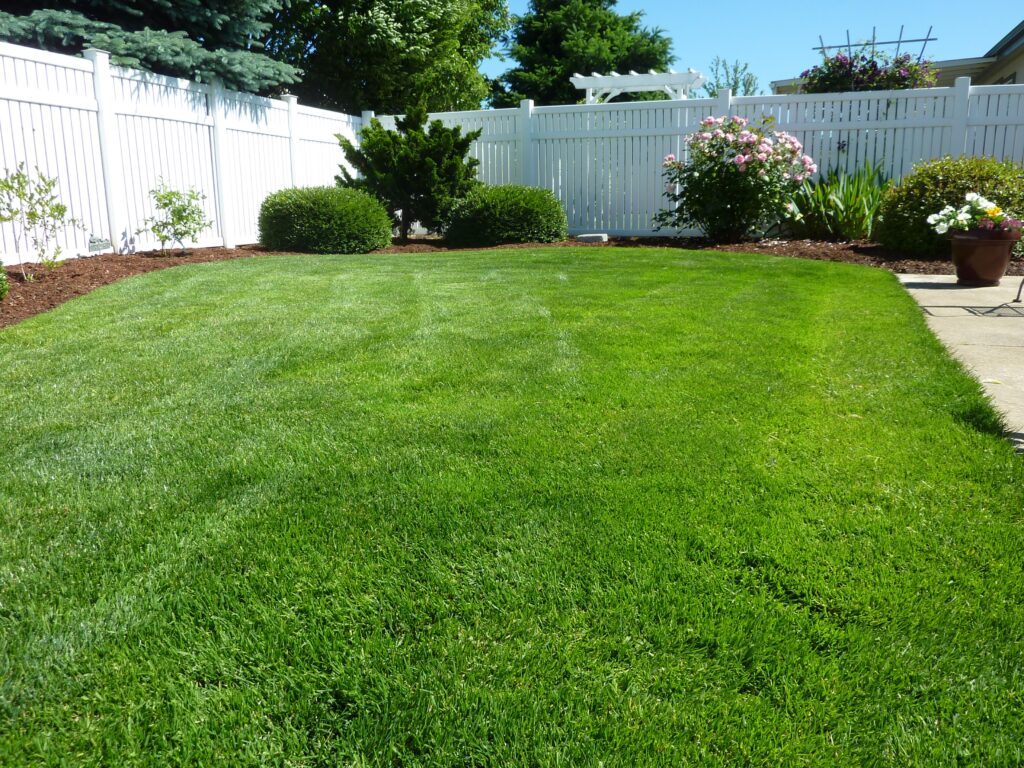
Your USDA hardiness zone tells you what grass can survive your winters. Planting a warm-season grass in zone 5 or 6 means months of brown dormancy and the risk of winter die-off in a bad year. Planting cool-season grass in zone 9 means fighting heat stress and excessive watering every summer.
The transition zone, roughly zones 6-7, is the hardest to plant. Cool-season grasses struggle with summer heat there, and warm-season grasses can have long dormant periods in winter. Tall fescue and Zoysia are the two grass types that perform most reliably in this overlap region, with Zoysia handling the warmer side of that range and tall fescue doing better in the cooler parts.
To find your exact zone, use the USDA Plant Hardiness Zone Map at planthardiness.ars.usda.gov and enter your zip code.
Mistakes That Turn a Low-Maintenance Grass into a High-Maintenance Problem
- Choosing based on appearance rather than zone: A neighbor’s lush Zoysia lawn might look great, but if you’re in zone 5, you’re looking at five months of brown and real winter kill risk. Pick for your zone first, appearance second.
- Planting in too much shade: Buffalo grass and Bermuda both need six or more hours of direct sun. Put either one under a tree canopy and you’ll spend the season fighting thin, patchy turf. Fine fescues and Zoysia handle shade better and are the right call for shaded areas.
- Skipping establishment care: Low-maintenance is a description of the mature grass, not the first season. Buffalo grass, for example, requires the same irrigation as Kentucky bluegrass during establishment, then drops off sharply once rooted (Colorado State University Extension, 2025). Cut back watering too early and you’ll thin the stand.
- Cutting too short: Mowing below the recommended height forces more frequent mowing for any grass type. Fine fescue should be kept at 3-4 inches. Buffalo grass at 3-8 inches. Scalping either one invites weeds and disease, adding work that would not otherwise exist.
Frequently Asked Questions
What is the lowest-maintenance grass you can plant in the US?
For cool-season climates (zones 3-6), fine fescue blends – especially sheep fescue and hard fescue – are the lowest-effort option. They can go three to four weeks between mowings and often need no supplemental irrigation (Nature’s Seed, 2025). For warm-season climates (zones 7-10), Buffalo grass holds a similar position: it survives on minimal water once established and grows slowly enough to need little mowing.
How often do you need to mow a low-maintenance grass?
It depends on the variety. Fine fescues grow slowly enough that mowing once a month during the growing season is typical; some homeowners skip mowing entirely for a low meadow look. Buffalo grass and Zoysia require mowing every 10-14 days at peak growth, compared to every 7 days for standard Kentucky bluegrass.
Can low-maintenance grasses handle kids and pets?
Zoysia and Bermuda handle foot traffic well. Buffalo grass and fine fescues do not. If your yard sees regular activity from kids or pets, Zoysia (warm climates) or tall fescue (cool climates) are the better choices. They’re still meaningfully lower-maintenance than Kentucky bluegrass while holding up to wear.
What is the most drought-resistant grass for a home lawn?
Buffalo grass is the most drought-resistant turf grass available for home lawns. Sheep fescue, a fine fescue variety, needs roughly 10 inches of water per year, which falls within normal rainfall for most of the US, making it effectively irrigation-free in many regions (Lawn Model, 2022). For warm climates, Buffalo grass can go fully dormant and survive without irrigation.
Will a low-maintenance grass stay green year-round?
Cool-season grasses like fine fescues and tall fescue stay green through winter in most of their range. Warm-season grasses like Zoysia, Bermuda, and Buffalo grass go dormant and turn brown once temperatures drop below about 50°F. In zones 7 and below, expect four to five months of dormant color from warm-season varieties.
Quick Comparison by Priority
| Priority | Best Cool-Season Pick | Best Warm-Season Pick |
|---|---|---|
| Least mowing | Fine fescue blend | Buffalo grass |
| Least water | Sheep fescue | Buffalo grass |
| Best shade tolerance | Creeping red fescue | Zoysia |
| Best for foot traffic | Tall fescue | Zoysia or Bermuda |
| Easiest to establish | Tall fescue | Bermuda |