What Makes Grass Grow Thicker and Faster: A Complete Guide
TL;DR
- Grass grows thicker when you feed it nitrogen on schedule, water deeply instead of often, and mow at the right height.
- Cool-season grasses need 2-4 lbs of nitrogen per 1,000 sq ft per year; warm-season grasses need 1-3 lbs (University of Nebraska-Lincoln Extension).
- Soil pH between 6.0 and 7.0 is the target range – outside that window, fertilizer doesn’t absorb properly (Purdue University Extension, 2024).
- Mowing at 3-4 inches and keeping your blade sharp are two of the fastest fixes for thin turf.
- Aeration plus overseeding in fall is the single most effective treatment for chronically thin or patchy lawns.
What Actually Makes Grass Grow Thick
credit: https://lawncowboys.com/
Grass grows thick when four things line up: the right nutrients in the soil, enough water delivered the right way, a mowing height that doesn’t stress the plant, and soil loose enough to let roots go deep.
None of those factors works in isolation. You can fertilize a compacted lawn all season and still end up with thin, struggling turf – because the roots can’t reach the nutrients. Get all four right at once, and you’ll see the difference within a few weeks.
Why Fertilizer Is the Starting Point
Nitrogen is the single biggest driver of thick, fast-growing grass. It’s responsible for leaf and shoot growth, and it’s what gives turf that dense, dark green look.
The right application rate depends on your grass type. According to University of Nebraska-Lincoln Extension data, cool-season grasses like Kentucky bluegrass and tall fescue need 2-4 lbs of actual nitrogen per 1,000 sq ft per year, applied mainly in fall and spring. Warm-season grasses like Bermuda and Zoysia need 1-3 lbs per year, with most applications in late spring and summer when they’re actively growing.
One easy approach: if you leave your clippings on the lawn after mowing, you can reduce your nitrogen needs by 25-50% because clippings break down and feed the turf (Cornell University Cooperative Extension).
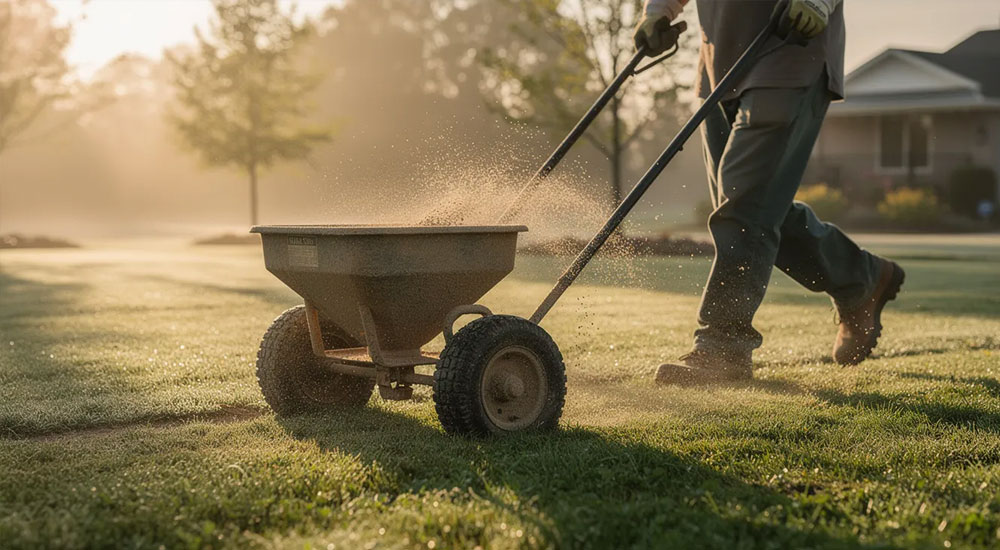
For new seeding or thin spots, Scotts Turf Builder Starter Food for New Grass is a high-phosphorus option that the company reports helps new grass grow up to 70% thicker and 35% faster compared to unfed lawns (Scotts, 2024). Use this kind of starter fertilizer when overseeding, not as a routine annual product – most established lawns don’t need extra phosphorus.
| Grass Type | Nitrogen Per Year | Primary Application Windows |
|---|---|---|
| Kentucky bluegrass | 2-4 lbs / 1,000 sq ft | Early fall, late spring |
| Tall fescue | 2-3 lbs / 1,000 sq ft | Early fall, early spring |
| Bermudagrass | 2-3 lbs / 1,000 sq ft | Late spring through summer |
| Zoysia | 1-2 lbs / 1,000 sq ft | Late spring through summer |
| St. Augustine | 2-4 lbs / 1,000 sq ft | Spring through early fall |
Soil pH: The Factor Most Homeowners Skip
Soil pH between 6.0 and 7.0 is what makes grass grow thick, regardless of how much fertilizer you apply. Outside that range, your lawn can’t absorb nitrogen, phosphorus, or potassium properly, even if all three are sitting right there in the soil (Purdue University Extension, 2024).
A basic soil test from your local extension office – typically $10-$20 – tells you your current pH and exactly what to add. If your pH is below 6.0, lime raises it. If it’s above 7.0, granular sulfur brings it down.
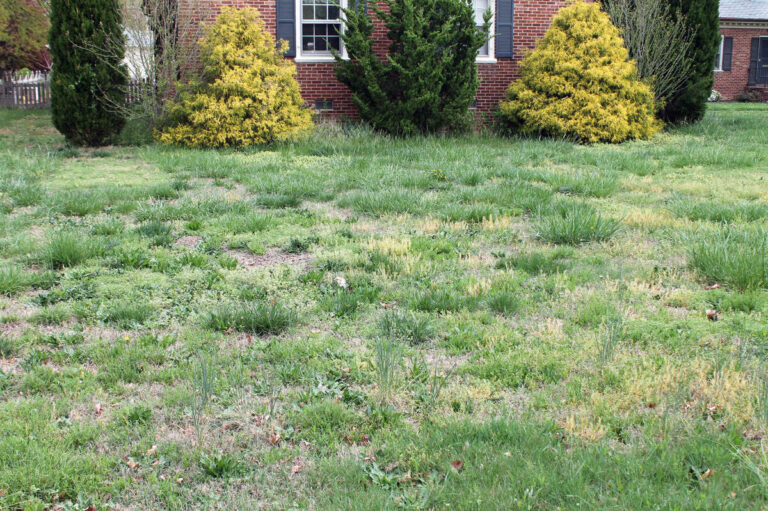
Thin, pale grass that doesn’t respond to fertilizer is a classic sign of a pH problem. Fix the soil first, then fertilize.
How to Water for Thicker Grass
Water deeply once a week rather than lightly every day. Deep watering pushes roots down further into the soil, which makes the lawn drought-resistant and thicker over time. Shallow, frequent watering does the opposite – roots stay near the surface where they’re vulnerable.
Aim for 1 to 1.5 inches of water per week, including rainfall. The easiest way to measure is to set an empty tuna can on the lawn while the sprinkler runs – when it’s full, you’ve hit about an inch.
Water in the early morning. Watering at midday wastes water to evaporation. Watering late in the evening leaves the grass wet overnight, which invites disease.
The Mowing Height That Builds Thickness
credit: https://www.thickgreenhealthy.com/
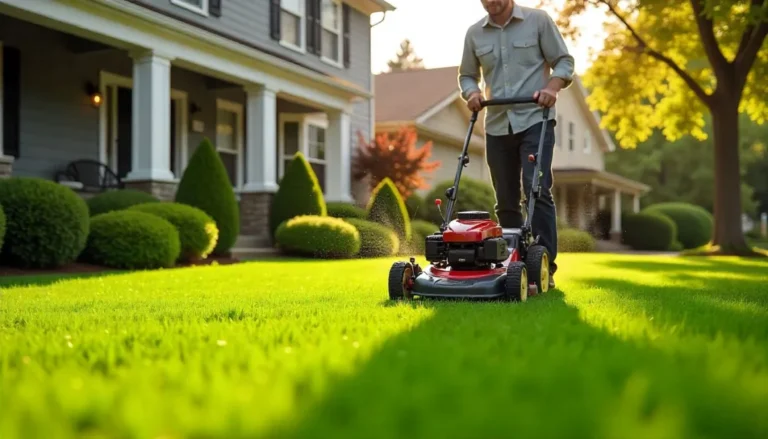
Mowing at 3-4 inches is one of the fastest ways to build a thicker lawn. Taller grass blades mean more leaf surface to capture sunlight, which means more energy going into root growth below ground.
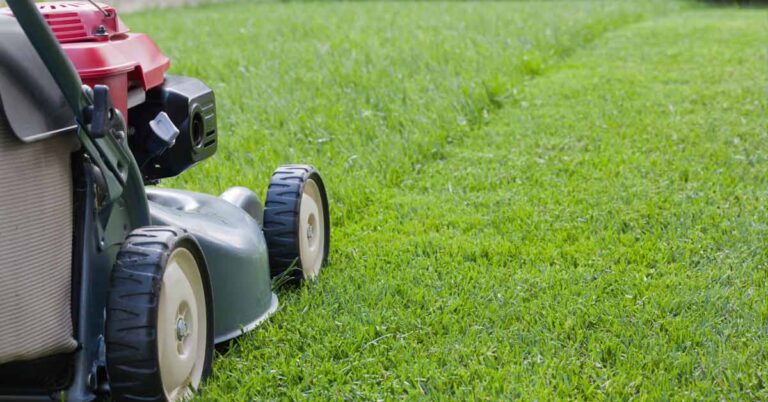
Keep your mower blade sharp. A dull blade tears grass instead of cutting it cleanly, leaving ragged edges that dry out faster and let disease in through the wound. Sharpening your blade once a season – or about every 8-10 mowing hours – makes a real difference.
Never cut more than one-third of the blade height in a single mow. Cutting too deep at once stresses the plant badly and thins the lawn.
Aeration and Overseeding: The Reset Button for Thin Lawns
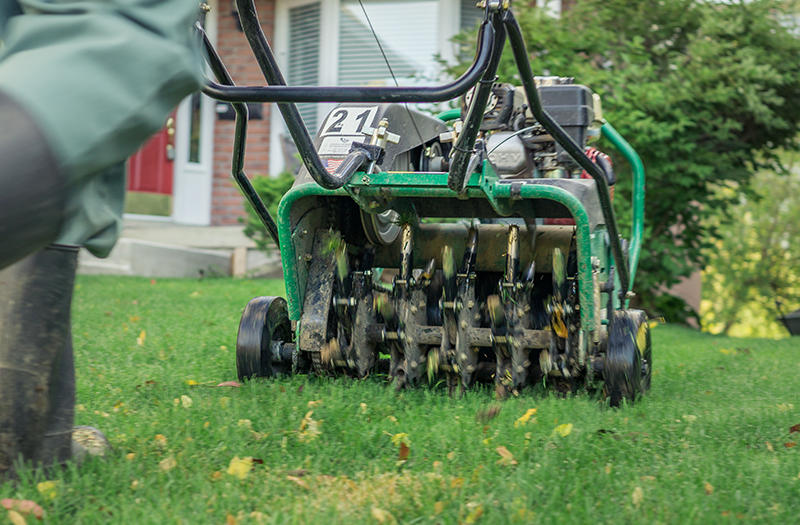
Compacted soil blocks water, air, and nutrients from reaching grass roots. Aeration – pulling small plugs of soil out of the ground – opens the lawn back up and lets everything penetrate again.
Fall is the best time to aerate and overseed cool-season lawns. Pennington Lawn Booster combines seed, fertilizer, and gypsum in a single product designed for this kind of annual fill-in. For warm-season grasses, late spring is the right window.
After overseeding, keep the top inch of soil consistently moist until the new seed germinates. Let new grass reach at least 3 inches before the first mow.
Common Mistakes That Keep Grass Thin
- Mowing too short: Cutting below 2.5 inches removes too much leaf blade and forces the plant to redirect energy away from root growth. This is called scalping, and it’s one of the fastest ways to thin a lawn.
- Watering too often and not deep enough: Frequent light watering trains roots to stay shallow. Shallow roots can’t handle heat stress or short dry spells.
- Skipping the soil test: Applying fertilizer without knowing your pH is guesswork. Your lawn may simply be unable to absorb what you’re putting down.
- Fertilizing at the wrong time: Pushing nitrogen onto warm-season grasses in fall, or cool-season grasses in midsummer, feeds weeds and stresses the turf rather than building thickness.
Frequently Asked Questions
What is the fastest way to make grass grow thicker?
The fastest combination is aerating the lawn to break up compaction, overseeding thin areas with quality grass seed matched to your region, and applying a starter fertilizer with phosphorus right after. Water daily until the new seed germinates. You’ll see measurable fill-in within 2-3 weeks.
How often should I fertilize to get thicker grass?
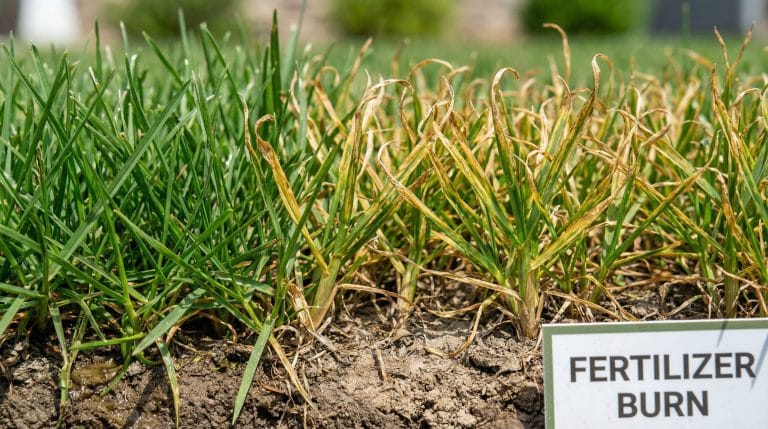
Most lawns do well with 2-4 fertilizer applications per year, spread out across the growing season. University of Nebraska-Lincoln Extension recommends splitting your total annual nitrogen into applications around late April, early June, early September, and early November for cool-season grasses. Don’t apply more than 1 lb of nitrogen per 1,000 sq ft in a single application to avoid burning the lawn.
Does watering more make grass grow faster?
Watering more often does not help and can hurt. Grass needs 1 to 1.5 inches of water per week total. The goal is to water deeply, once or twice a week at most, so roots grow down. Frequent light watering keeps roots shallow and makes the lawn weaker, not thicker.
What happens if you mow grass too short?
Mowing below 2.5 inches removes too much of the photosynthesizing blade and forces the plant to draw on stored energy reserves rather than building roots. Over several weeks, this thins the lawn, allows weeds to move in, and makes the turf vulnerable to drought and heat stress.
Can I fix thin, patchy grass without re-sodding?
Yes. Aeration followed by overseeding handles most cases of thin or patchy turf without the cost of sod. Match the seed type to what you already have growing. Correct your soil pH first if a test shows it’s off. With consistent watering after seeding, most lawns fill in well within 4-6 weeks.
How do I know if my soil needs lime or sulfur?
The only reliable way to know is a soil test. Your local cooperative extension office – often through a land-grant university like Purdue, Penn State, or the University of Minnesota – can process a sample for $10-$20 and tell you exactly what your soil needs and at what rate to apply it.