Why Your Lawn Dries Out So Quickly After Irrigation
TL;DR
- Sandy soil, compacted soil, and thatch buildup over ½ inch are the three most common reasons a lawn loses moisture fast after watering.
- Watering between 10 a.m. and 4 p.m. wastes water to evaporation before it can reach the roots – the University of Georgia Extension estimates 50% more water is lost at midday compared to early morning watering.
- Most lawns need 1 to 1.5 inches of water per week applied in one or two deep sessions, not daily short runs (Scotts, 2024; Clemson Extension, 2021).
- Daily light watering trains grass roots to stay shallow, making drought stress worse over time.
- The fix is usually aeration, thatch removal, or switching to a cycle-and-soak schedule – not simply watering more.
What Actually Happens to Water After It Hits Your Lawn
credit: https://www.epicgardening.com/
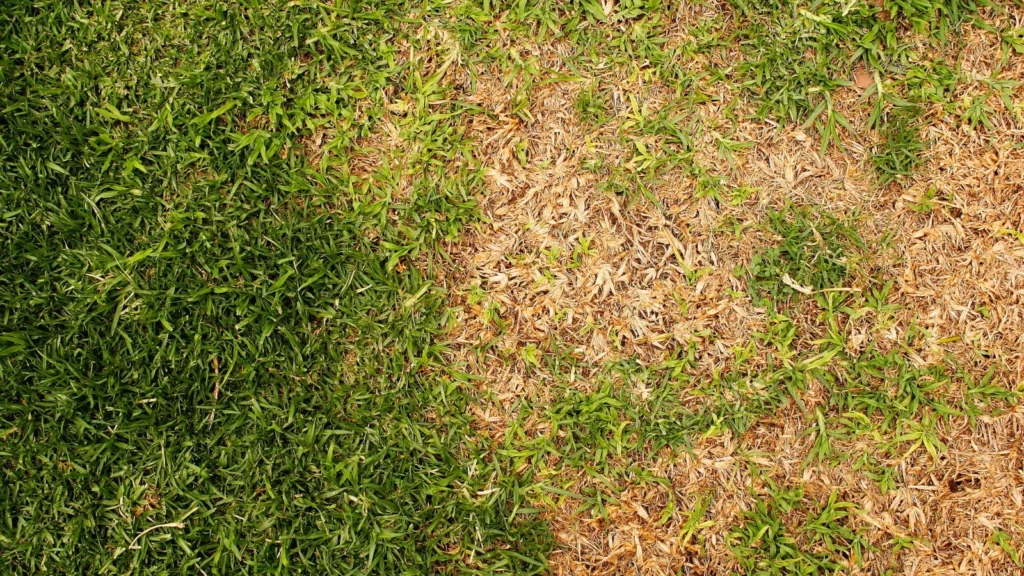
Water applied by an irrigation system has three places it can go: into the soil, across the surface as runoff, or straight into the air as evaporation. When a lawn dries out fast, at least one of those three exits is stealing water before the grass roots can use it.
The root zone of most turfgrasses sits 6 to 8 inches below the surface (Scotts, 2024). If water doesn’t reach that depth, it evaporates from the top inch of soil quickly – sometimes within an hour or two in summer heat. That’s why the lawn can look perfectly fine right after the sprinklers stop, then look stressed by mid-afternoon.
How Soil Type Determines How Fast Your Lawn Dries Out
Soil type is the single biggest factor in how long your lawn holds moisture after irrigation. Sandy soil has large particles and large pores, so water moves through it fast. A very sandy lawn can drain the top few inches of soil in less time than it takes the sprinkler cycle to finish.
Clay soil is the opposite: small particles hold water tightly, but compacted clay doesn’t let water in quickly either, so it runs off instead of soaking in. According to Michigan State University Extension, low-volume, frequent irrigation sessions work better for sandy soils, while heavy clay lawns do better with one deep, single-event watering per week.
Loamy soil – a mix of sand, silt, and organic matter – holds the most moisture and is what most homeowners are working toward with amendments like compost.
| Soil Type | How Fast It Dries | Best Watering Approach |
|---|---|---|
| Sandy | Very fast (hours) | Split into 2-3 smaller sessions per week |
| Loamy | Moderate (1-2 days) | One or two deep sessions per week |
| Clay (uncompacted) | Slow | One deep session per week |
| Clay (compacted) | Runoff, then fast | Cycle-and-soak; aerate first |
Why Thatch Makes Your Lawn Shed Water Instead of Absorbing It
Thatch is the layer of dead stems, roots, and organic debris that builds up between the soil and the grass blades. A thin layer up to ½ inch is fine – it acts as light insulation. Once it goes past ½ inch, it becomes a problem.
A thick thatch layer works like a dry sponge sitting on top of your soil. It absorbs the first bit of water that falls on it, holds that moisture near the surface where it evaporates fast, and actively blocks water from reaching the root zone below. The University of Massachusetts Extension confirms that thatch over ½ inch reduces irrigation efficiency and increases runoff significantly (UMass Extension, 2024).
You can measure thatch by pulling a small plug of turf and looking at the brown layer between the green tops and the dark soil. If it’s thicker than a pencil eraser, it’s affecting your watering.
Colorado State University Extension recommends dethatching when the layer exceeds ½ inch to restore normal water infiltration (CSU Extension, 2026).
How Soil Compaction Prevents Water from Reaching the Roots
credit: https://perfectgroundsolutions.co.uk/
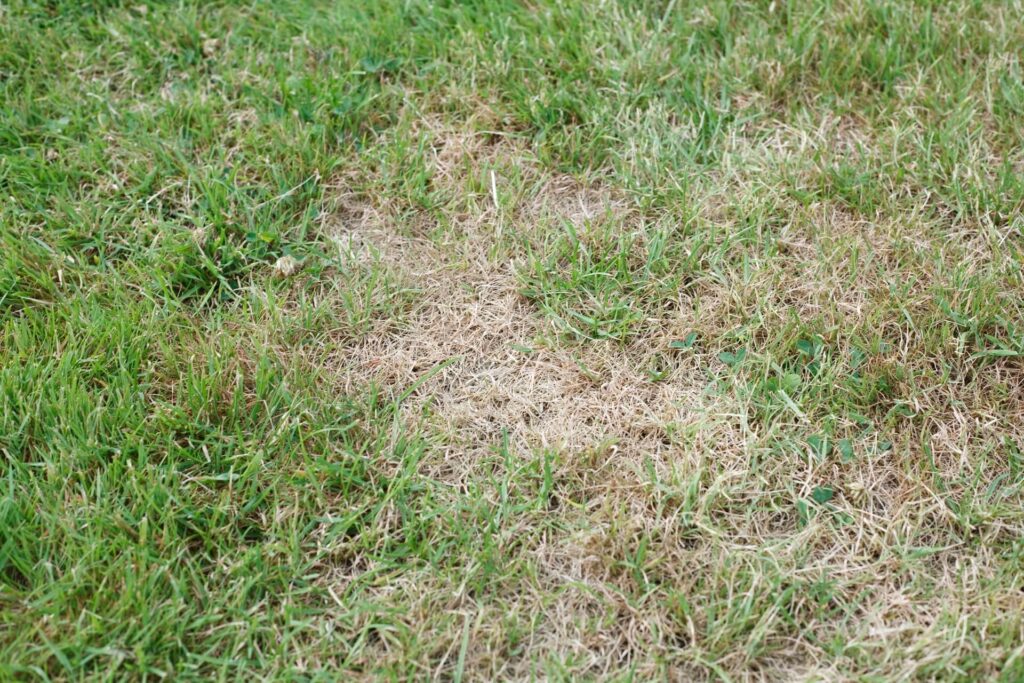
Compacted soil is a close second to thatch as a cause of fast-drying lawns. When soil particles are pressed too tightly together, there’s no room for water to move downward. Instead, it sits on the surface and either evaporates or runs off the sides of your yard.
Foot traffic, mowing, and even rainfall over time compact soil – especially clay-heavy lawns in neighborhoods with new construction, where heavy equipment has already compressed the ground. North Carolina State University Extension describes core aeration as the most effective mechanical fix, removing small plugs of soil to open up channels for water and air to enter the root zone (NC State Extension).
A single aeration event on 1,000 square feet of turf increases the effective soil surface area by roughly 2,180 square feet, which directly improves water infiltration (UMass Extension, 2024). Core aeration is best done in early fall for cool-season grasses like fescue and bluegrass, or in late spring for warm-season grasses like Bermuda and Zoysia.
Why Watering at the Wrong Time Wastes Half Your Water
The time of day you run your irrigation system changes how much of that water actually reaches the roots. According to the University of Missouri Extension, the best window is 6 to 8 a.m.: wind is calm, temperatures are low, and evaporation loss is minimal (MU Extension, 2017).
The University of Georgia Extension found that 50% more water is lost to evaporation when watering at midday compared to early morning (UGA Extension). Running your sprinklers between 10 a.m. and 4 p.m. during summer means a large portion of what you put down never touches the root zone.
Evening watering is better than midday but comes with its own problem. Water sitting on grass blades overnight creates conditions that encourage fungal disease.
Early morning (before 10 a.m.) is the clear choice for any irrigation system timer.
How Daily Light Watering Trains Your Lawn to Dry Out Faster
Watering a little every day is one of the most common habits that makes the dry-out problem worse over time. When grass receives a shallow application daily, roots stay near the surface because that’s where the moisture is. A shallow root system has almost no buffer against heat or drought.
Lawns that are watered deeply but infrequently develop roots that reach 6 to 8 inches into the soil. Those roots can tap into moisture that surface evaporation never touches. Clemson University Extension recommends most turfgrasses receive about 1 inch of water per week, applied in one or two sessions rather than daily small amounts (Clemson Extension, 2021).
Scotts recommends the same approach: 1 to 1.5 inches per week, in one or two sessions, timed to wet the soil to a 6 to 8-inch depth (Scotts, 2024).
Warning Signs That Tell You Which Problem You Have
| Symptom | Most Likely Cause | First Step |
|---|---|---|
| Lawn dry within hours in same spots every time | Irrigation head misalignment or sandy patch | Do a catch-can audit; adjust heads or split sessions |
| Entire lawn dry by afternoon, water runs off edges | Compaction or thatch | Core aerate; dethatch if layer exceeds ½ inch |
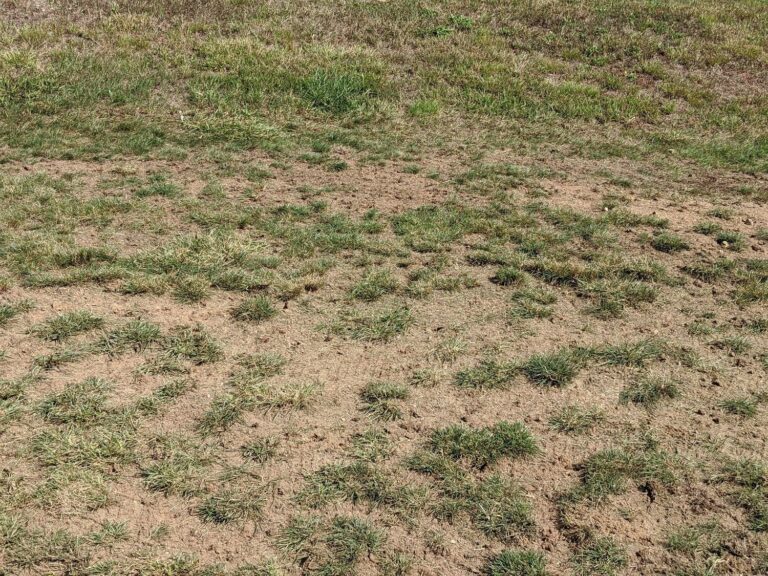
| Footprints visible on lawn more than an hour after walking | Drought stress from shallow roots | Switch to deep, infrequent watering |
| Lawn looks fine after irrigation but wilts by midday in summer | Normal dormancy in heat; midday watering loss | Move irrigation to early morning |
| Dry patches in rings or arcs near sprinkler heads | Poor sprinkler coverage | Adjust or replace heads for overlapping coverage |
Watering Mistakes That Make the Problem Worse
- Running irrigation at midday: Water applied between 10 a.m. and 4 p.m. in summer heat loses a significant share to evaporation before it can soak in. Set your timer to finish before 9 a.m.
- Watering every day for short cycles: This keeps roots shallow and creates a lawn that depends entirely on surface moisture. Two deep sessions per week builds root depth and drought resilience.
- Ignoring thatch and compaction: Adding more water doesn’t fix either problem – it just wastes it. Aerate in the appropriate season for your grass type, and measure thatch depth before assuming you need to water more.
- Not adjusting for grass dormancy: In peak summer heat, cool-season grasses like tall fescue, Kentucky bluegrass, and perennial rye naturally slow down and may brown slightly. That’s not a watering failure. Pushing extra water onto a dormant lawn causes disease without helping the grass.
Frequently Asked Questions
Why does my lawn dry out so fast even when I water every day?
Daily watering keeps moisture near the surface, which trains roots to stay shallow. Shallow-rooted grass dries out faster because surface soil evaporates quickly. Switch to one or two deep weekly sessions that wet the soil 6 to 8 inches deep, and roots will follow the moisture downward over several weeks.
How do I know if my soil is too compacted to absorb water?
Push a screwdriver or a thin probe into the soil after watering. If it won’t go deeper than 2 to 3 inches without real effort, the soil is compacted. You can also watch for water pooling or running off the surface within minutes of your sprinklers starting. Core aeration is the most effective fix for established lawns.
What is a cycle-and-soak schedule and does it actually work?
A cycle-and-soak schedule breaks your irrigation runtime into short bursts with resting periods in between. For example, instead of running a zone for 20 minutes straight, you run it for 7 minutes, pause 30 minutes, then run it again for 7 minutes. This gives compacted or clay soil time to absorb each round before the next one starts. The University of Massachusetts Extension specifically recommends this approach for soils with low infiltration rates (UMass Extension, 2024).
How thick is too thick for thatch?
Anything over ½ inch starts to block water absorption. Measure it by pulling a small plug of turf and looking at the brown layer between the green grass blades and the dark soil below. If it’s thicker than a pencil eraser, dethatch. For thick layers, a power dethatcher (also called a vertical mower) is more effective than raking by hand.
When is the best time to water my lawn to prevent fast drying?
Water between 6 and 10 a.m., before the sun and heat are strong enough to drive high evaporation. According to the University of Missouri Extension, this window gives water the best chance to soak into the soil before heat pulls it back out (MU Extension, 2017). Evening watering is a distant second – it reduces evaporation loss but increases fungal disease risk if grass blades stay wet overnight.