What Healthy Soil Looks Like: Signs & Tests
TL;DR
- Healthy soil is dark brown, crumbly, smells earthy, and drains water within minutes instead of pooling on the surface.
- Earthworms are one of the best free indicators. More worms generally mean better drainage, porosity, and organic matter.
- Organic matter targets vary by region, but most extension labs consider 3% to 6% the healthy range for lawns.
- Most turfgrasses grow best at a soil pH between 6.0 and 7.0.
- You can check most of this in your backyard with a shovel, a jar of water, and a $15 to $25 lab soil test.
What Does Healthy Soil Look Like?
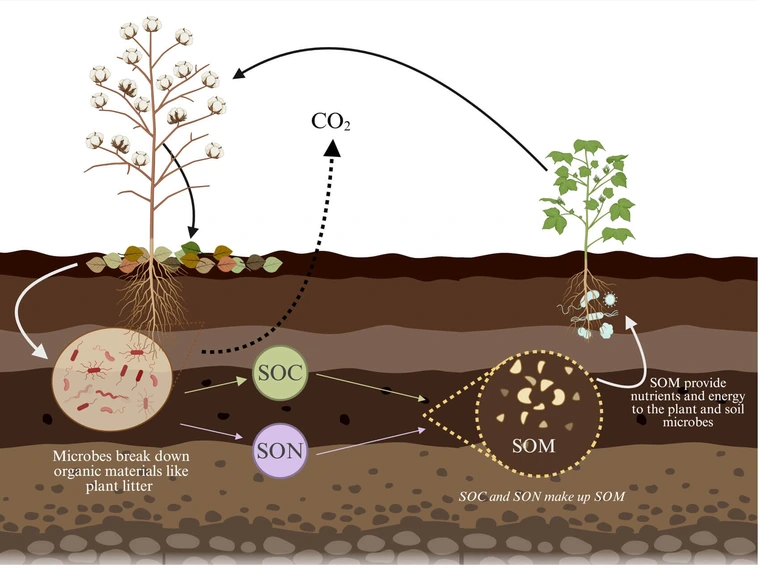
Healthy soil is dark brown to near-black, holds together in soft crumbly clumps, smells like a damp forest floor, and is full of life like earthworms and fine white root threads. When you dig a shovelful, it should break apart into loose aggregates rather than coming up as a solid brick or sandy dust.
Color is the fastest visual clue. Darker soil usually means more organic matter, since decomposed plant material darkens the soil as it builds up. Pale gray, yellow, or red-orange topsoil often signals low organic content or heavy clay.
The smell matters too. That sweet, earthy odor comes from actinomycetes and other soil microbes doing their work. A sour, rotten-egg, or chemical smell points to poor drainage and a lack of oxygen down in the root zone.
Why Healthy Soil Matters for Your Lawn
Healthy soil feeds your grass, holds water through dry spells, and lets roots grow deep enough to survive summer heat. Even a well-fed lawn struggles when the soil underneath is compacted, lifeless, or the wrong pH.
Soil pH controls whether your grass can actually use the fertilizer you put down. When pH drops below 5.5 or climbs above 8.5, most applied nutrients become locked up and unavailable to the turf even when they are present in the soil. That is why a yellow, patchy lawn does not always mean it needs more fertilizer. Sometimes the soil simply cannot deliver what is already there.
Organic matter does the heavy lifting for water. It acts like a sponge in the root zone, improving water retention, nutrient availability, and aeration. Soil rich in organic matter bounces back from drought far better than thin, sandy ground.
The 5 Signs of Healthy Soil You Can Check Yourself
You can judge most soil health markers with simple backyard tests, no lab required for the first pass. Below are the five signs that tell you the most, and what each one means.
| Sign | What Healthy Looks Like | What Poor Looks Like |
|---|---|---|
| Color | Dark brown to near-black | Pale gray, yellow, or hard red clay |
| Structure | Crumbly clumps that break apart easily | Solid brick or loose sand |
| Smell | Sweet, earthy, like forest floor | Sour, metallic, or rotten |
| Drainage | Water soaks in within a few minutes | Water pools or stays for hours |
| Life | Earthworms, roots, insects present | Bare, dense, no visible life |
Dark Color and Crumbly Texture
Dig down 6 to 8 inches and look at the soil. Good lawn soil is dark and breaks into soft, rounded clumps called aggregates. Those clumps are held together by roots, fungal threads, and binding agents from earthworms and microbes. Soil that crumbles into dust or comes up as a solid block has weak structure and poor air flow for roots.
Earthworms and Visible Life
Earthworms are the single easiest indicator to check. Dig a shovelful of moist soil and count the worms. More earthworms generally point to better drainage, porosity, and organic matter. They tunnel through the soil, which opens channels for water and air to reach roots. A spade of healthy lawn soil often turns up several worms. Bare, lifeless soil turns up none.
Good Drainage and Water Infiltration
Healthy soil absorbs water instead of letting it run off or sit on top. To check, dig a hole about a foot deep, fill it with water, let it drain, then fill it again and time it. If water still stagnates for two days or longer, you have poorly drained soil that needs help. Quick infiltration means the soil has the open pore space roots need.
How Much Organic Matter Should Healthy Soil Have?

Most extension labs consider 3% to 6% organic matter the healthy range for lawns and gardens, though the ideal depends on your region and soil type. In Iowa, levels between 3% and 6% are considered ideal, and anything below 3% calls for action. Some programs set the bar at 5% or higher for top productivity.
The catch is that you cannot eyeball an exact percentage. Color gives you a rough read, but only a lab soil test reports the real number. If your test comes back under 3%, the fix is the same one every extension service recommends: add organic matter over time.
Three proven ways to build it up:
- Leave your grass clippings on the lawn after mowing so they break down and feed the soil instead of filling a bag.
- Mulch fallen tree leaves into the turf in fall with a mulching mower rather than raking them away.
- Top-dress with a thin layer of compost, around a quarter to half inch, raked into the lawn surface.
What Soil pH Should a Healthy Lawn Have?
Most turfgrasses grow best at a soil pH between 6.0 and 7.0, which is slightly acidic to neutral. Within that band, nutrients stay available and soil microbes that break down thatch and organic matter stay active.
Purdue Extension treats 6.0 to 7.5 as the optimum range and notes most Indiana turf soils do not even need lime. Below 6.0, you may need lime to raise the pH. Above 7.5, sulfur is the usual recommendation, though it works slowly and is often impractical for large lawns.
Your grass type shifts the target. Centipedegrass tolerates acidic soil down to a pH of 5.0 to 6.0, so it suits naturally acidic Southern ground. Match your grass to your soil and you fight pH less.
How to Test Your Soil at Home and With a Lab
Start with the free backyard checks, then confirm the numbers with a paid lab test. The home tests tell you about structure, drainage, and life. The lab test tells you pH, organic matter percentage, and nutrient levels you cannot see.
For the lab test, take core samples from the upper 4 to 6 inches of soil and remove the thatch layer first, since thatch throws off the organic matter reading. Most extension services recommend pulling 7 to 10 random cores from each area, like front yard separate from back, then combining them into one sample. A basic test through a university extension lab usually runs about $15 to $25, though prices vary by state and lab.
| Test Method | What It Tells You | Cost |
|---|---|---|
| Shovel and look | Color, structure, worms, roots | Free |
| Jar drainage test | How fast water infiltrates | Free |
| University extension lab | pH, organic matter, nutrients | $15 to $25 (varies by state) |
| Home pH meter or strips | Rough pH only, less reliable | $10 to $30 |
Common Mistakes That Hide Soil Problems
- Adding more fertilizer to a struggling lawn before testing pH. If the pH is off, the grass cannot use the extra nutrients, so you waste money and risk runoff.
- Judging soil only by the surface. The top inch can look fine while compacted clay sits below the root zone. Always dig down at least 6 inches.
- Sampling the thatch layer in a lab test. Including thatch inflates the organic matter reading and gives you a false sense of healthy soil.
- Skipping the drainage check. Color and texture can look decent while water still pools, which drowns roots and invites disease.
Frequently Asked Questions
What does healthy soil look like?
Healthy soil is dark brown to near-black, breaks into crumbly clumps, smells earthy, drains water within minutes, and holds visible life like earthworms and roots. Pale color, a brick-like or dusty texture, and pooling water all point to poor soil health.
How can I tell if my lawn soil is healthy without a lab test?
Dig a shovelful about 6 inches down and check four things: color, how easily it crumbles, how many earthworms you find, and whether it smells earthy or sour. Then do a drainage test by filling a hole with water and timing how long it takes to soak in.
How much organic matter should healthy lawn soil have?
Most extension labs consider 3% to 6% organic matter the healthy range, with some setting the target at 5% or higher. Below 3% generally means you should add compost or leave clippings to build it up over time.
What is the best soil pH for a lawn?
Most turfgrasses grow best between a pH of 6.0 and 7.0. Below 5.5 or above 8.5, grass struggles to absorb nutrients even when fertilizer is present.
How do earthworms show that soil is healthy?
Earthworms tunnel through soil, which improves drainage, porosity, and air flow to roots, and they break down organic material into nutrients. More earthworms in a shovelful generally signals soil with better drainage and organic matter.
How long does it take to improve unhealthy soil?
Building organic matter is gradual. Where topsoil is thin, you may need to add compost for a few years to raise levels meaningfully. pH changes from lime are also slow, and extension services suggest retesting in about three years.
Sources
- University of Minnesota Extension, “Soil testing for lawns and gardens.”
- Iowa State University Extension, “How to Interpret Soil Test Results” (2025).
- University of Georgia Extension, soil pH data for turfgrass (via LawnStarter).
- Noble Research Institute, “Look for These Soil Health Indicators in the Field” (2024).
- Mississippi State University Extension, “Soil pH is important for a healthy lawn.”
- Michigan State University Extension, “Healthy soils.”
- University of Missouri Extension, “Improving Lawn and Landscape Soils.”
- Purdue Extension, “Fertilizing Established Lawns” (AY-18-W).
- North Dakota State University Extension, “Interpreting the NDSU Soil Test Analysis for Managing Turfgrass” (2025).
- University of Maryland Extension, “Understanding Your Soil Test Report.”