Why Grass Looks Dull Even When Healthy: The Real Causes
TL;DR
- Most dull-looking lawns are healthy. The flat appearance usually comes from how light reflects off grass blades, not from a disease or nutrient problem.
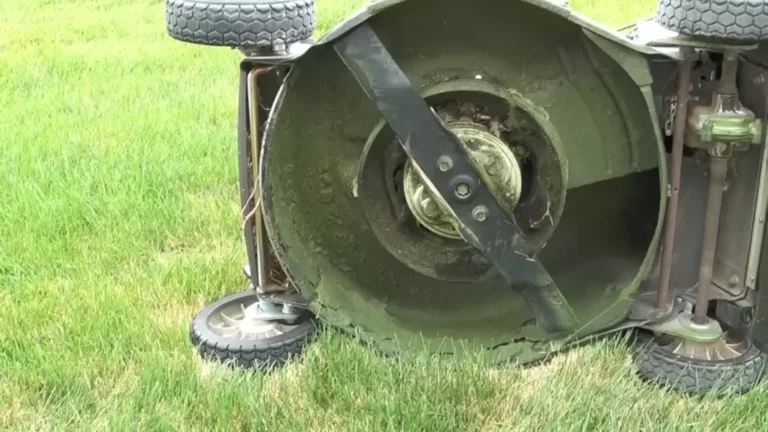
- A dull mower blade is the most common fixable cause. It tears grass instead of cutting it, leaving frayed brown tips that gray out the whole lawn within 1 to 2 days (Utah State University Extension).
- Dust, pollen, hard-water spots, and lingering dew all sit on the leaf surface and scatter light, which mutes the green you see.
- The direction you mow changes how blades bend and reflect sunlight, so the same healthy lawn can look bright or dull depending on your viewing angle.
- Before you fertilize, sharpen the blade, rinse the leaves, and look at the lawn from a different angle. Color often returns without adding a thing.
Why Does Healthy Grass Still Look Dull?

credit: https://www.kingstownelawn.com/
Healthy grass looks dull most often because of how light hits the leaf surface, not because anything is wrong with the plant. Grass color is partly real pigment and partly reflection. When the surface is rough, dusty, or bent toward you, less light bounces back to your eye and the lawn reads as flat or gray-green even when the roots and blades are thriving.
Think of it like a car. A clean, freshly waxed hood looks deep and glossy. The same paint covered in road dust looks dull and chalky, even though the paint underneath is fine. Grass works the same way. The green is still there. The surface is just scattering the light instead of reflecting it cleanly.
This matters because the usual reaction to a dull lawn is to add fertilizer or water. If the real cause is a dull blade or a film of dust, fertilizer won’t fix it and may even stress the grass.
How Light Reflection Changes the Color You See
The single biggest reason a healthy lawn looks dull is the angle of the grass blades relative to the sun and your eye. When blades bend away from you, they expose a wide, flat surface that reflects more light and looks bright. When blades bend toward you, you see mostly the narrow tips and the shadows underneath, so the same grass looks darker and duller (Scag Power Equipment, 2022).
This is the exact effect behind lawn striping on baseball fields and golf courses. According to Tyler Carr, a turfgrass extension specialist at Ohio State University, the light and dark bands are not different grass or different cutting heights. They come entirely from blades bent in different directions reflecting sunlight at different angles (Lawn Love, 2025).
A few practical takeaways follow from this:
- The position of the sun changes everything. A lawn that looks rich at 7 p.m. with the sun low and behind you can look washed out at noon with the sun overhead.
- Your viewing angle matters. Walk to the other side of the yard and the dull patch often turns bright, because you have changed which way the blades are leaning relative to you.
- Taller grass shows color better. Longer blades have more surface area to catch light, which is why a lawn cut at 3.5 inches usually looks lusher than the same lawn buzzed to 1.5 inches.
Why a Dull Mower Blade Makes the Whole Lawn Look Gray
credit: https://executivelawncare.net/
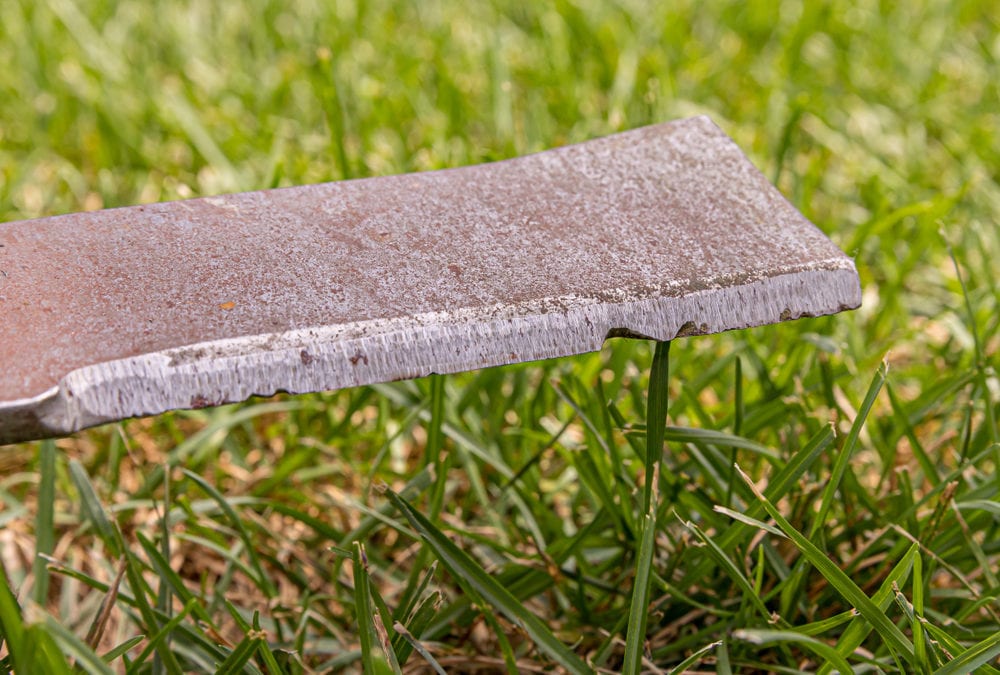
A dull mower blade is the most common fixable reason a healthy lawn looks flat and grayish. A sharp blade slices each leaf cleanly. A dull blade tears and shreds it, and those ragged edges dry out and turn brown or white within a day or two (Utah State University Extension). Multiply that frayed tip across millions of grass blades and the whole lawn takes on a dull, hazy cast.
A dull blade tears grass the way a butter knife mangles a tomato instead of slicing it. The plant is still healthy. The cut is the problem.
You can confirm this in about ten seconds. Walk the lawn a day after mowing and look closely at the tips. Clean, flat cuts mean the blade is fine. Shredded, brown, or feathered tips mean the blade is dull (LawnStarter, 2026). Beyond the color, torn tips lose moisture faster and open the door to disease, so a dull blade is worth fixing for plant health too (University of Maryland Extension, 2023).
Most homeowners should sharpen the blade every 20 to 25 hours of mowing, which works out to once or twice per season for an average yard (LawnStarter, 2026).
What Sits on the Leaf and Dulls the Surface
Anything coating the grass surface scatters light and mutes the color, even on a perfectly healthy lawn. The most common culprits are dust, pollen, hard-water mineral spots from sprinklers, and a heavy morning dew that hasn’t burned off yet. Each one puts a thin layer between the green leaf and your eye.
Here is how the common surface causes compare and what to do about each.
| Surface Cause | Why It Dulls the Lawn | The Quick Fix |
|---|---|---|
| Dust and dry soil film | Coats blades during dry spells and after foot or mower traffic, scattering light | A light rinse with the hose or the next rain restores color |
| Pollen | Settles in heavy spring layers, especially under trees, adding a yellow-gray haze | Rinse or wait for rain; it clears as the pollen season ends |
| Hard-water spots | Sprinkler water leaves mineral residue that dries to a chalky film on the leaf | Water early so leaves dry slowly, or rinse with softer water if available |
| Lingering dew | A wet film changes how light reflects, often making grass look gray at dawn | No action needed; color returns once the dew evaporates by mid-morning |
The tell here is timing. If the lawn looks dull only in the early morning or right after a dry, windy week and brightens after rain, the cause is on the surface, not in the soil.
When Dullness Actually Signals a Problem
Most dullness is cosmetic, but a few patterns point to a real issue worth checking. The difference is consistency and shape. Light-reflection dullness shifts as you move around the yard, while a genuine problem stays put and usually has a defined edge or pattern.
Watch for these signs that the grass itself, not the light, is the issue:
- Distinct brown patches that hold their shape no matter where you stand often mean grubs feeding on the roots or a fungal disease, not light angle (Penn State Extension).
- Uniform yellowing across the whole lawn can point to a nitrogen shortage, though you should rule out a dull blade and dust first before fertilizing.
- Dull strips that line up exactly with your wheel tracks suggest soil compaction or an uneven, scalping deck rather than a reflection trick.
Scalping is its own trap. Cutting too short exposes the lower stems and crowns, which are pale and woody compared to the green upper leaf, so a scalped lawn looks dull and patchy even when it is alive (Lawn Buddies, 2026). The fix is to follow the one-third rule and never remove more than a third of the blade height in a single mow.
Common Mistakes That Make a Dull Lawn Look Worse
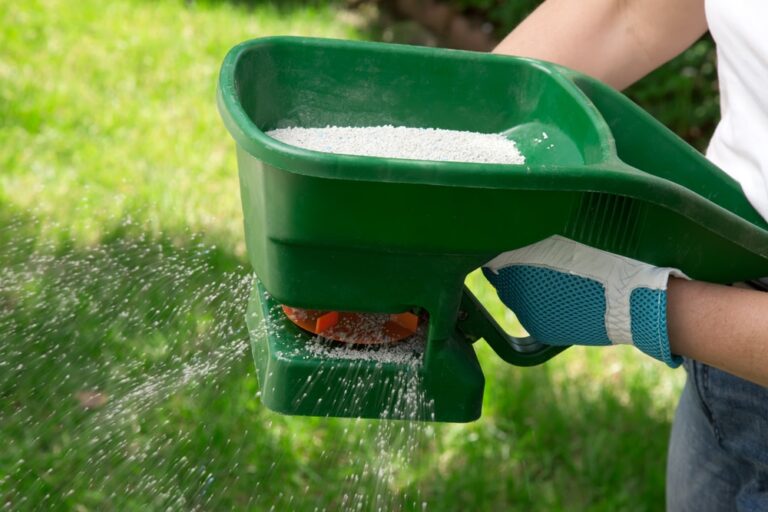
- Reaching for fertilizer first: Adding nitrogen to a lawn that is dull from a dull blade or dust does nothing for the color and can burn the grass if overapplied.
- Mowing the same direction every time: This bends blades one way permanently and bakes in a flat look, plus it compacts the soil along the same wheel paths (Lawn Love, 2025).
- Cutting too short to mow less often: Scalping trades a little time now for a pale, stressed lawn that takes weeks to recover.
- Ignoring the blade all season: Running one dull blade from spring to fall guarantees frayed tips and a gray cast on every cut after the first month or two.
Frequently Asked Questions
Why does my grass look dull even though it is green and healthy?
Usually it is light reflection. When grass blades bend toward you, they show their narrow tips and shadows and look darker and duller, while the same blades bent away look bright. Dust, dew, and a dull mower blade can add to the effect without meaning the grass is unhealthy.
How can I tell if a dull blade is the cause?
Walk the lawn a day after mowing and look at the grass tips up close. Clean, flat cuts mean your blade is fine. Frayed, shredded, or brown tips mean the blade is dull and needs sharpening (LawnStarter, 2026).
Will watering or fertilizing fix a dull-looking lawn?
Only if the dullness comes from drought stress or a true nutrient shortage. If the cause is a dull blade, surface dust, or light angle, watering and fertilizing won’t restore the color and over-fertilizing can stress the grass. Check the blade and rinse the leaves first.
Why does my lawn look brighter in the evening than at midday?
The sun’s angle changes how much light reflects off the blades back to your eye. With the sun low and behind you in the evening, more light bounces off the wide face of each blade, so the lawn looks richer. Overhead noon light flattens that contrast.
How often should I sharpen my mower blade to keep grass looking sharp?
Sharpen every 20 to 25 hours of mowing, which is about once or twice per season for most homeowners (LawnStarter, 2026). If you mow a large or sandy yard, lean toward the more frequent end.